Reviving Sabani Sailboats
Photography: Ichi Nakamura/Words: Sam Holden
Thanks to Tomohiro Yoshida, traditional Okinawan sailboats are once again becoming central to Yaeyama culture
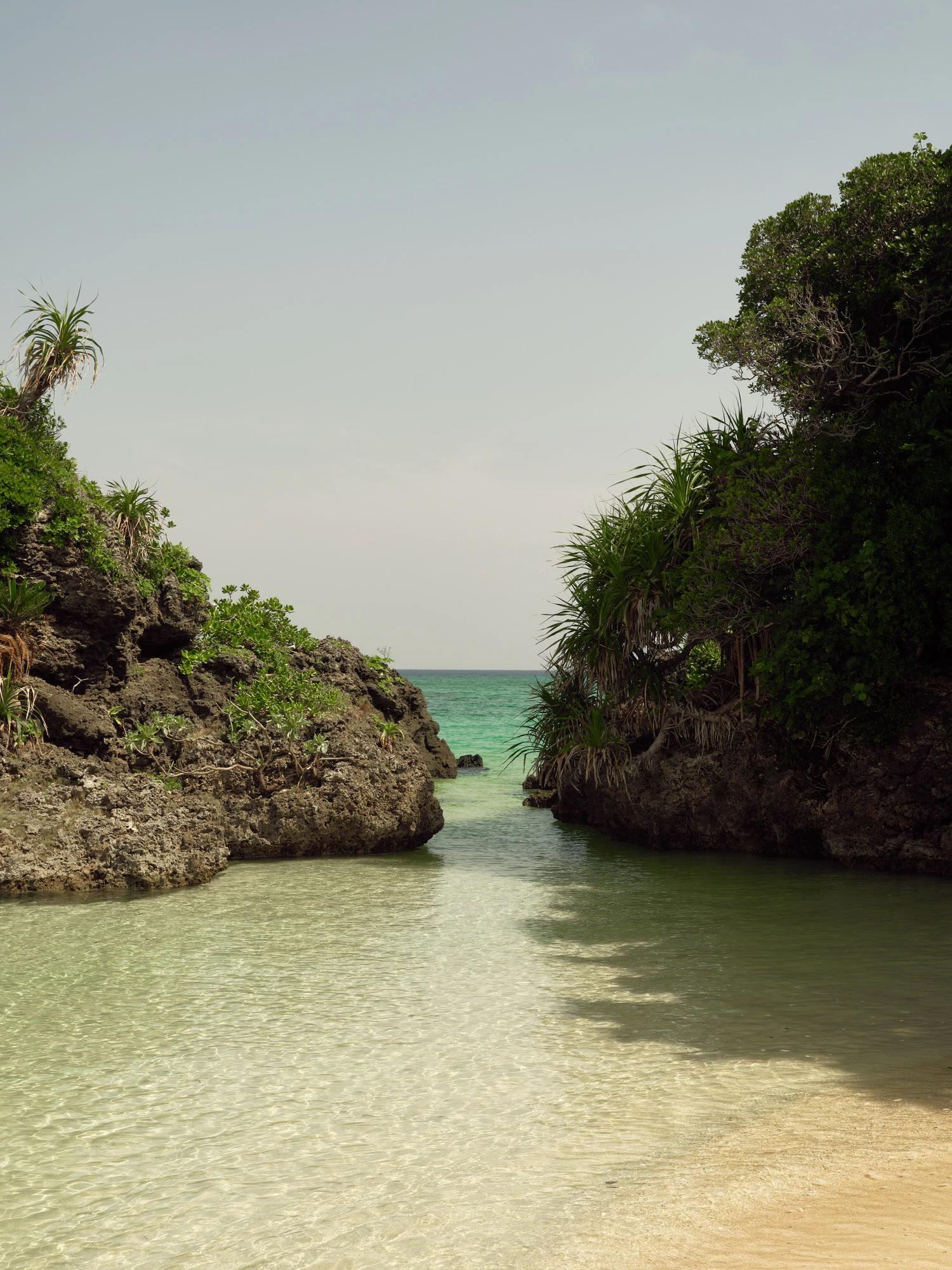
Fifteen years ago, Tomohiro Yoshida built his first sabani—a word that perhaps derives from “shark boat” in the local language. It now sits outside his open-air workshop. That single boat may be what kept the tradition of sabani alive on Ishigaki. Sabani are wooden craft, powered by sail and oars. Okinawans once used them daily for fishing and transport between nearby islands. They began to disappear during the American occupation, when engines and plastic hulls became more convenient. Yoshida is one of fewer than ten craftsmen across Okinawa who continue to build sabani boats for enthusiasts, races, and tours. Yoshida lives and works near the tip of Ishigaki’s narrow, lightly populated Hirakubo peninsula, where small villages are nestled amid the forest and hidden beaches hug calm, blue waters. After putting in a few hours on a new boat in the early morning, he usually takes a group out for a tour. “Most people these days have never traveled by wind before, but I think the sensation is hardwired into our system,” he says. “Some visitors come here straight from the airport. Sabani sailing is a nice way to reset your clock to island time.”
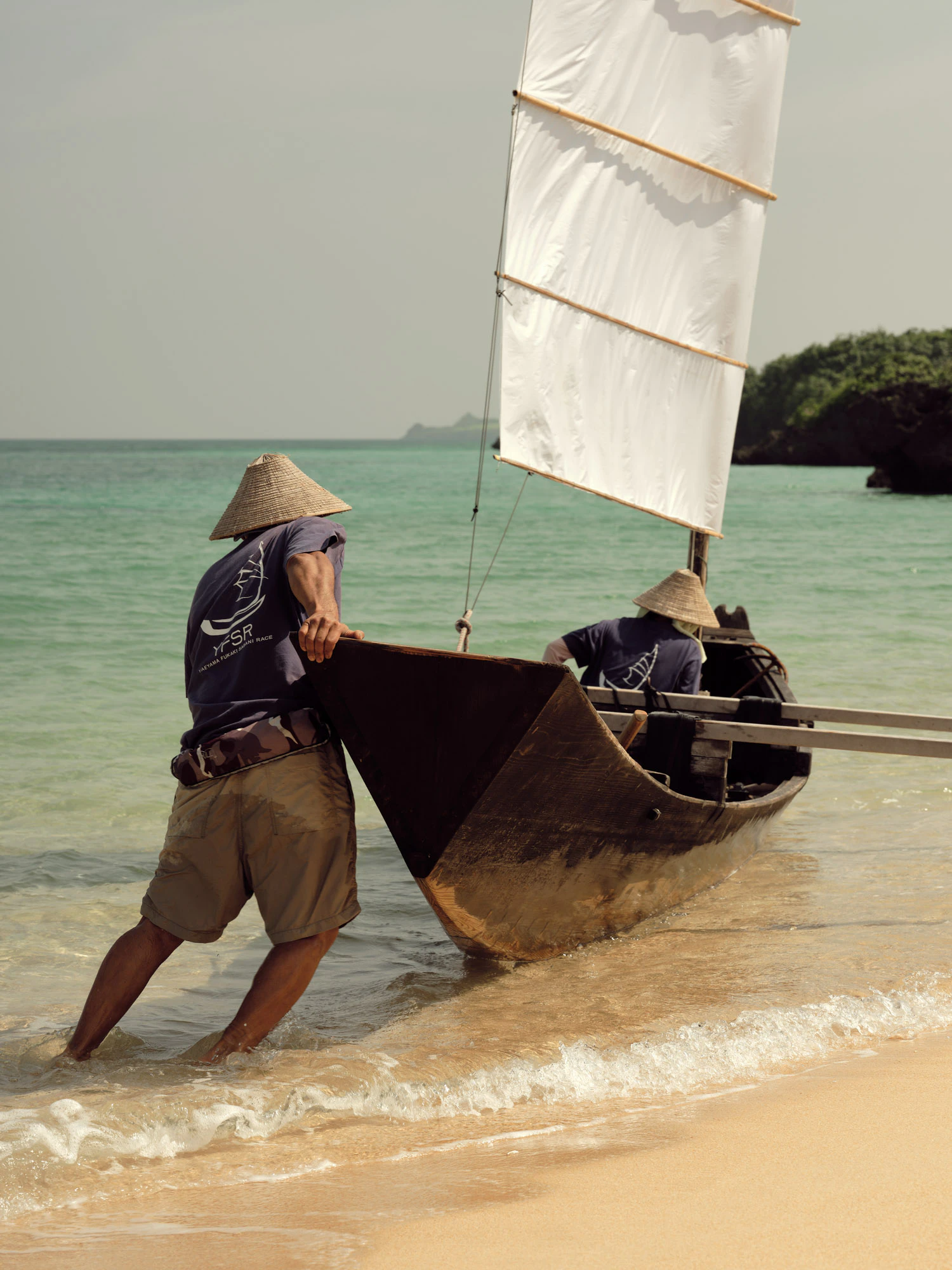
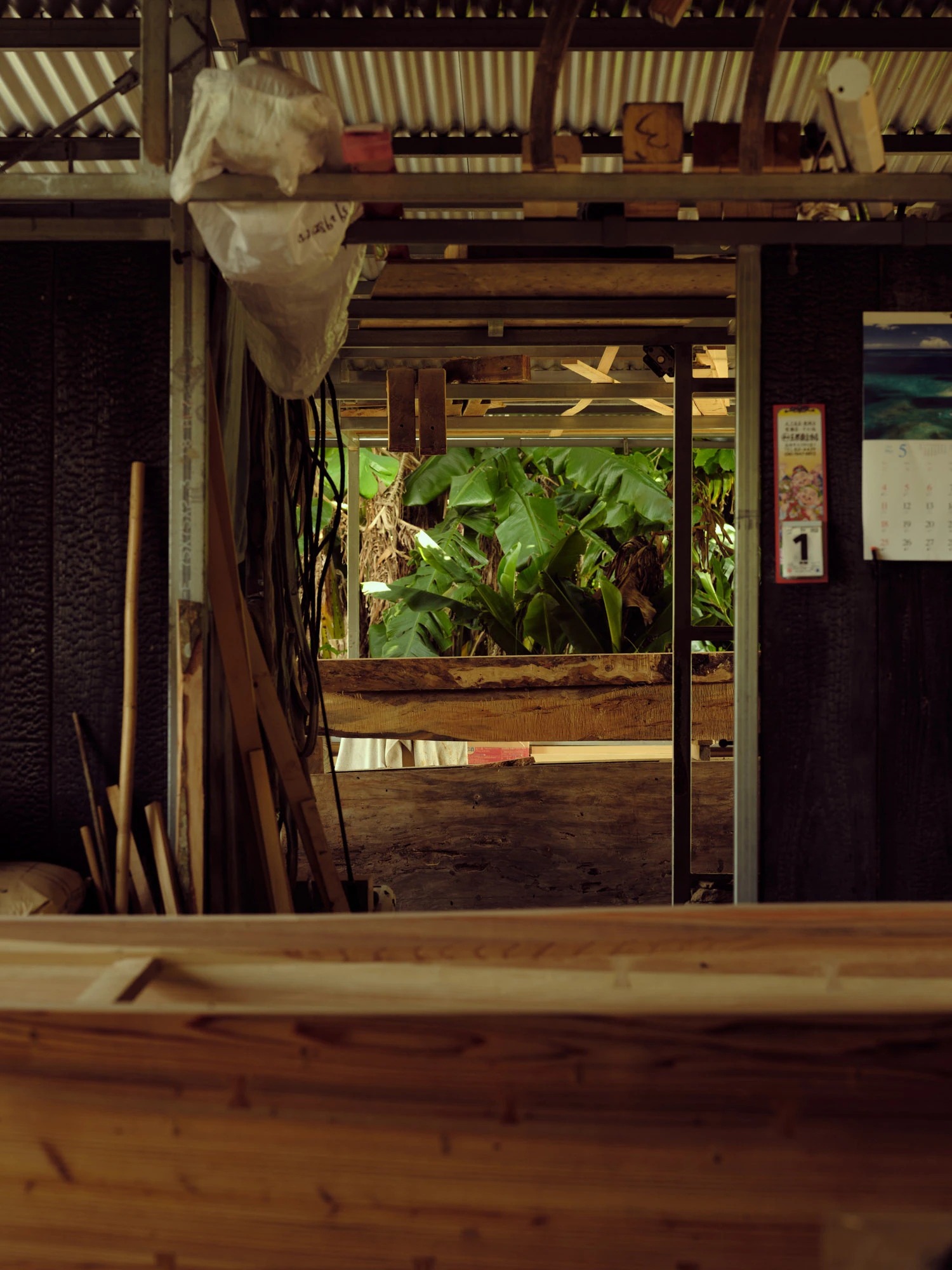
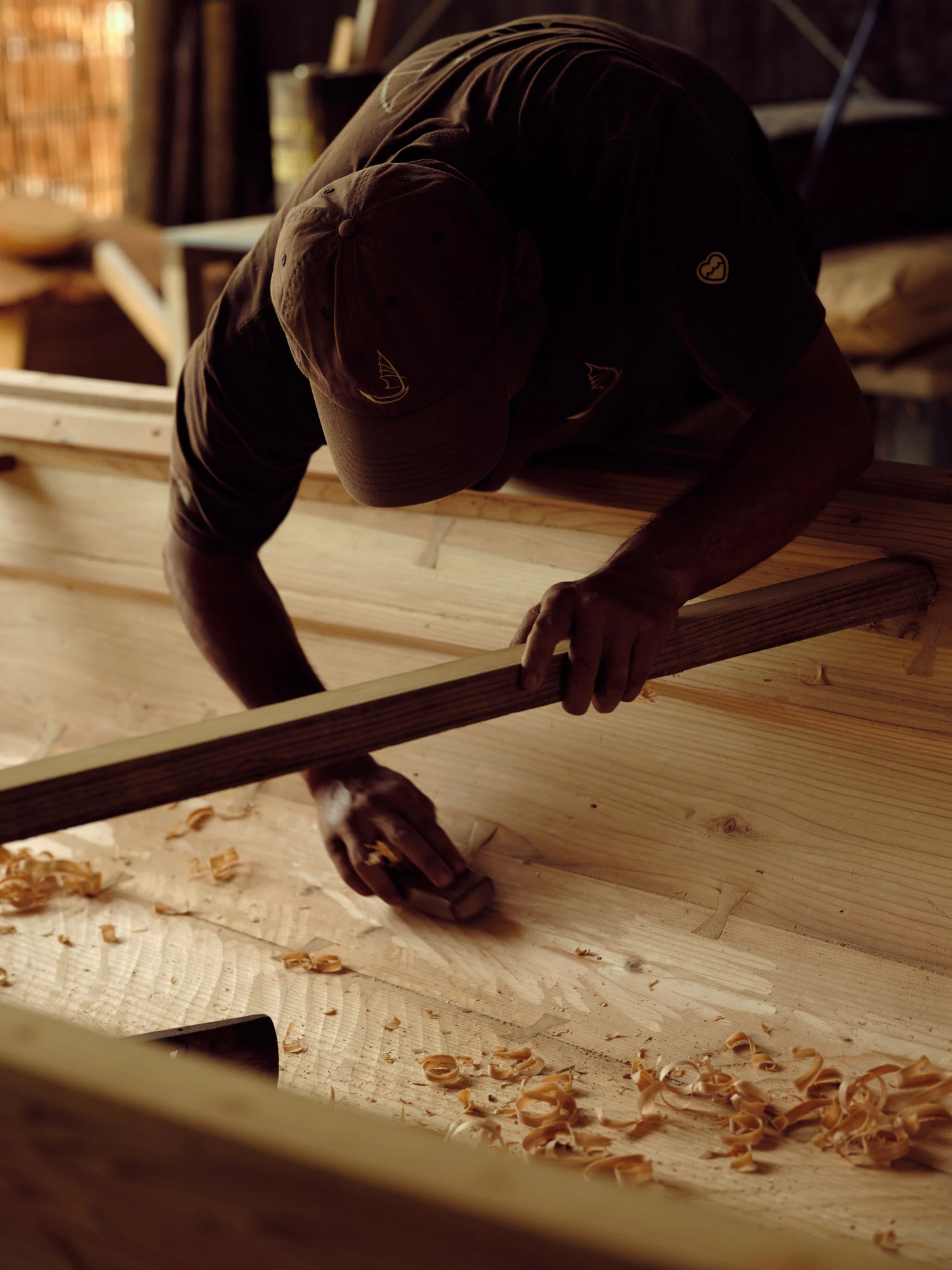
Yoshida himself arrived in Ishigaki from Tokyo more than two decades ago, when he was in his late 20s. He worked in construction, agriculture, and other jobs, but dreamed of owning his own boat. One day, he caught wind of a rumor: Ishigaki’s last sabani craftsman was getting ready to call it quits. He had read about this boatbuilder and felt he needed to visit his workshop. Yasuhiro Arashiro, in his mid-eighties and hard of hearing, didn’t look up from his work until Yoshida was standing right in front of him. After putting in a hearing aid, he cut to the chase: Did you come to build a sabani? “I hadn’t thought that far, but said yes,” Yoshida recalls. The craftsman pointed at a stack of wood and told him to come back when he was ready to start. His teacher was a man of few words. Yoshida learned through observation and carefully phrased questions. His first boat took about two months. By the end of the process, he felt boatbuilding was his calling. Arashiro gave him some useful advice: Make three boats and learn from your mistakes. From your fourth, make your own name as a boat maker. Yoshida now delivers several boats per year. Each takes a few months from start to finish. Sabani are built upside-down, from oil-rich Obi cedar from Miyazaki. Boards are bent gradually from bow to stern to form the sides, and temporarily held in place by clamps until wooden bow-tie inlays and bamboo nails are hammered in. The bottom of the boat is carved from a thick log, resulting in a bottom-heavy vessel that can remain stable without an outrigger. Once Yoshida achieves a watertight fit, he planes the hull and sands it into a smooth, all-wood surface that can last 50 years at sea.
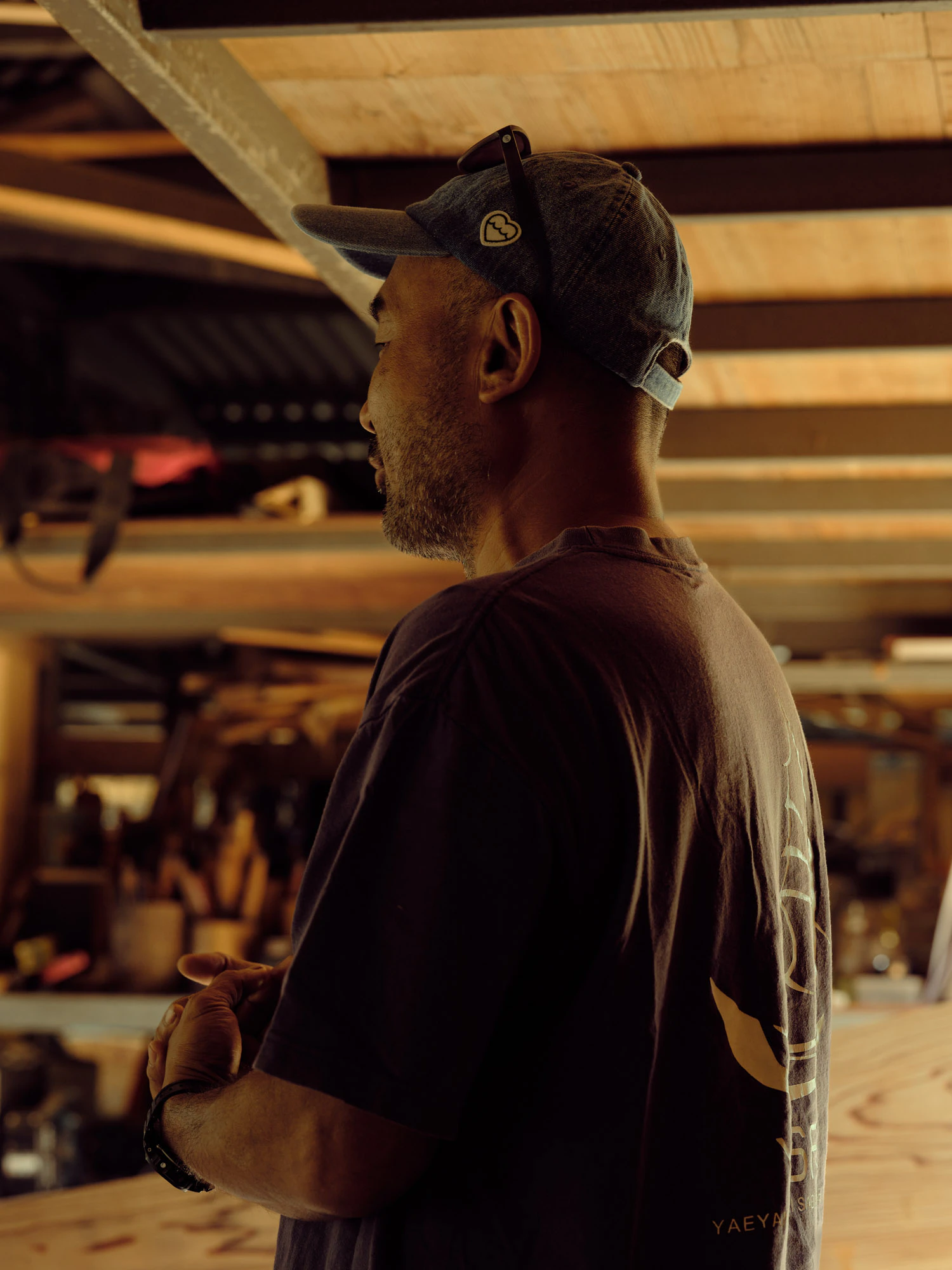
Yoshida’s workspace is filled with specialized woodworking chisels, curved planes, and hand saws inherited from Arashiro or bought from toolmakers across Japan. With a background in carpentry, Yoshida says this world requires more improvisation than normal. “Boatbuilders are definitely less cut and dried,” he laughs. Yoshida’s next boat—his 30th—will be for himself. Each sabani is still an experiment. Only through experience has he learned the reasons behind certain ways of doing things that his teacher neglected to fully explain. Yoshida turned what might have been an end for sabani into a new beginning. When he embarked on his new endeavor, he drew up a business plan to sell a few boats each year and teach people to use them for tours. The bank where he applied for a loan told him, if you’re the only person building sabani on Ishigaki, why not corner the sabani-tour market yourself? But Yoshida understood that traditional crafts live or die as part of an ecosystem, and passing on sabani to the next generation would need buy-in from many people. He is now teaching a younger boatbuilder his techniques. “My hope is that a hundred years from now, there will be boatbuilders all over the islands. People will understand the importance of sabani, and nobody will worry about their survival.”
New
MIYAZAKI
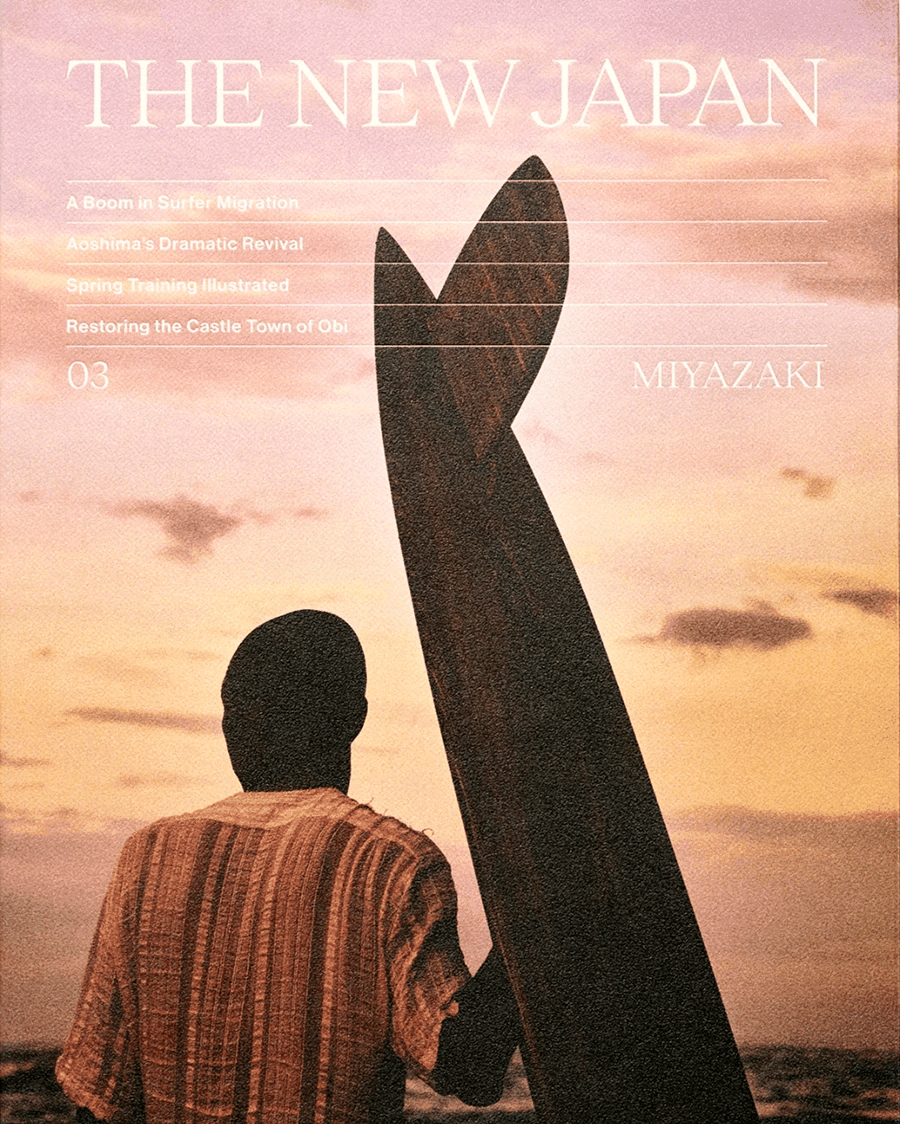
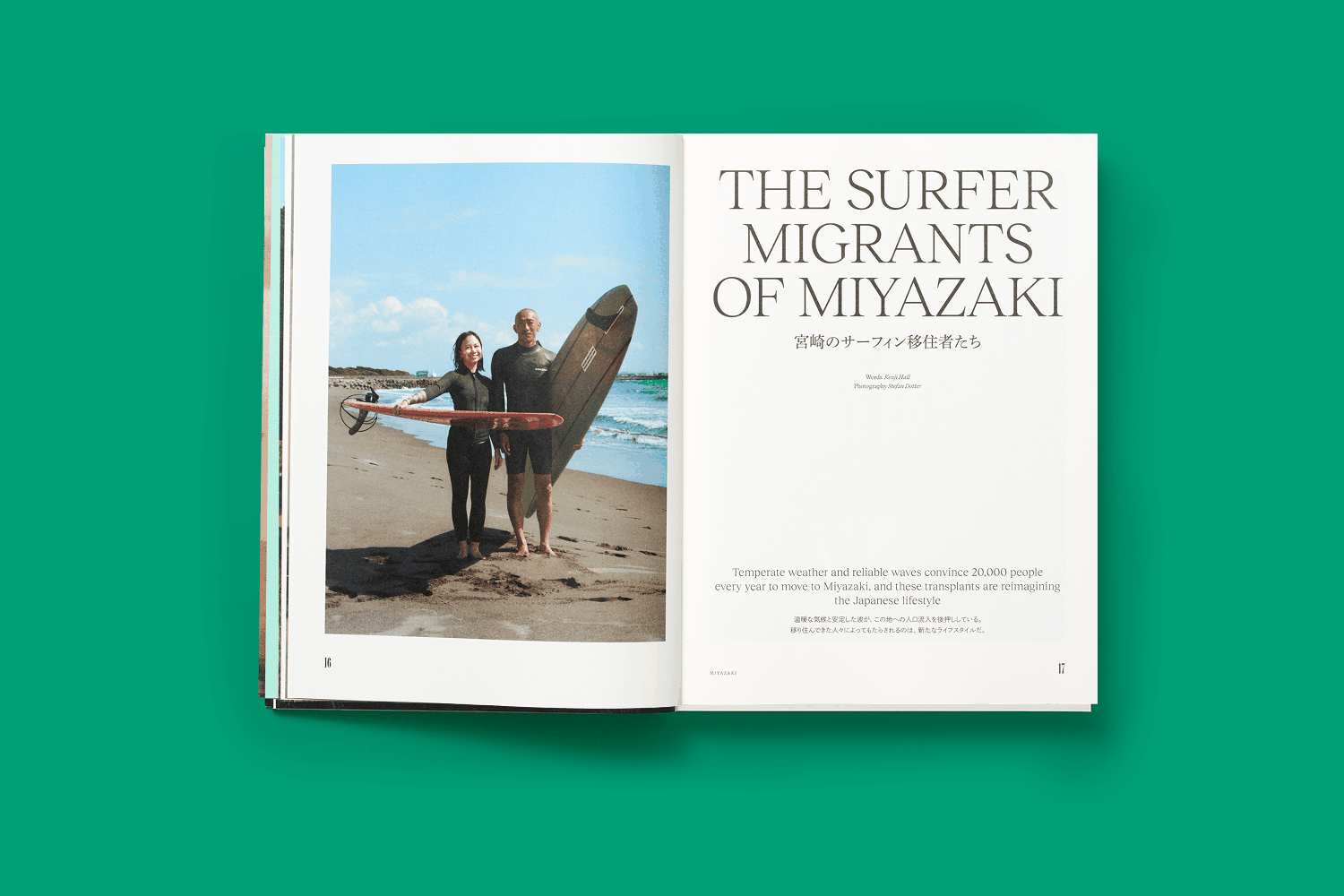
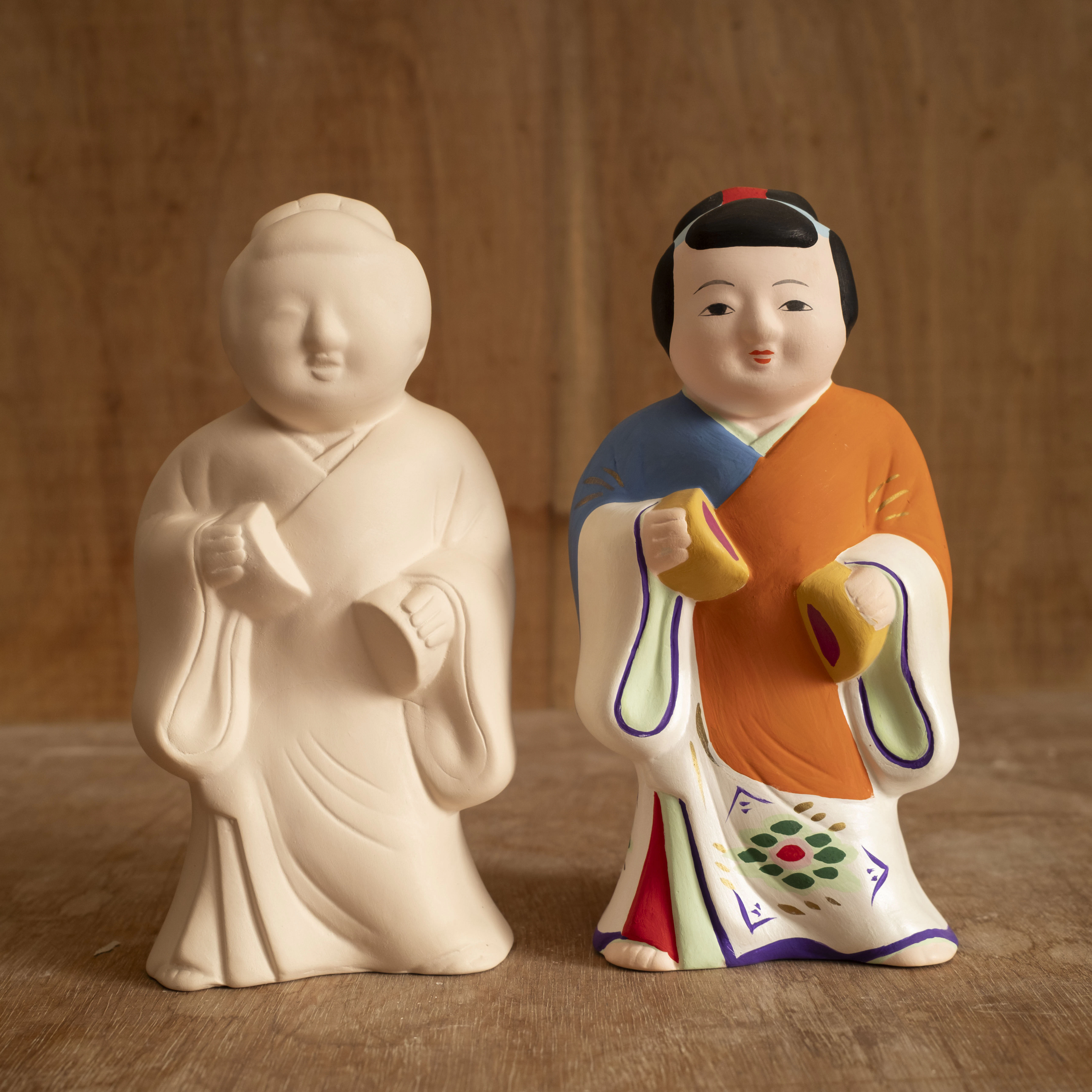
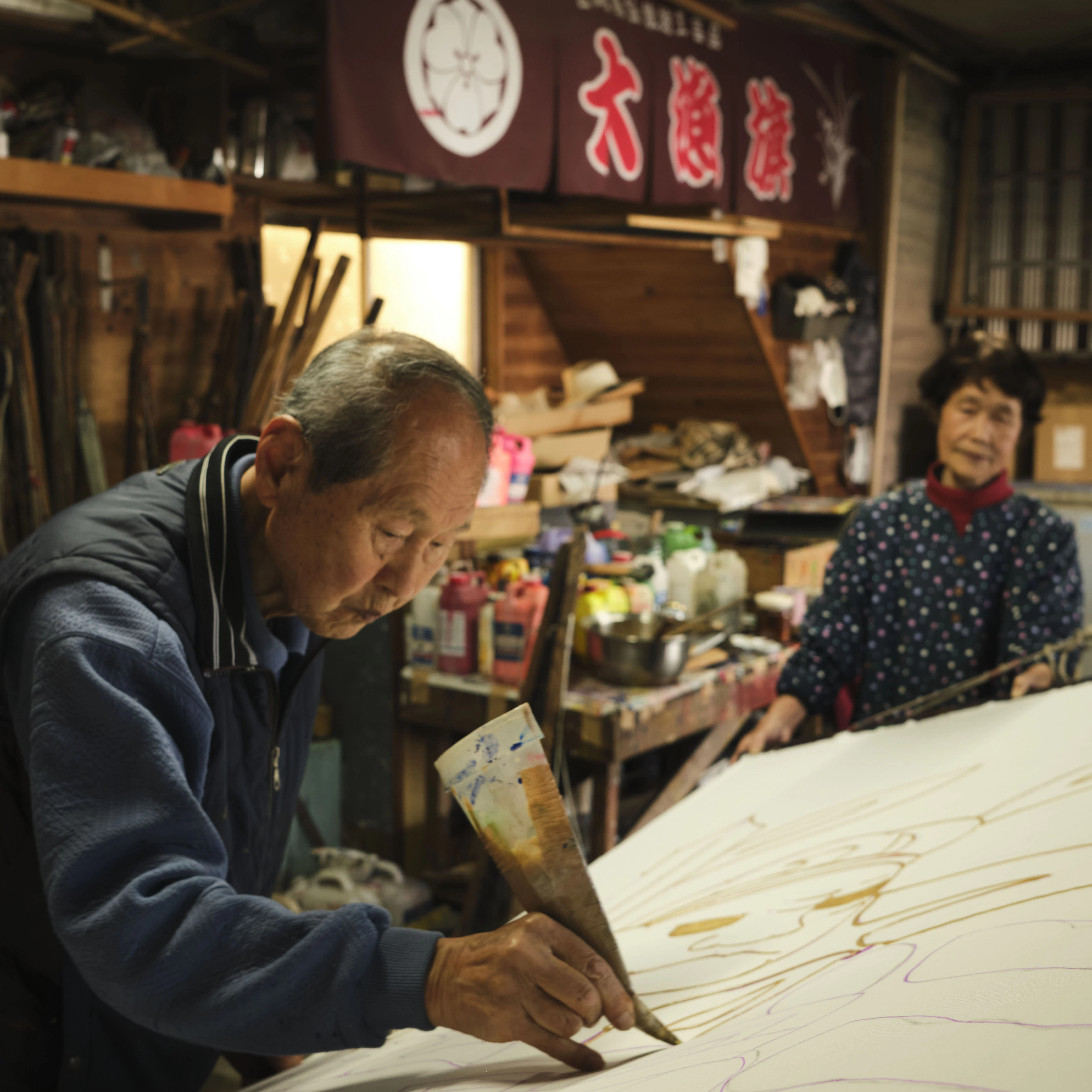
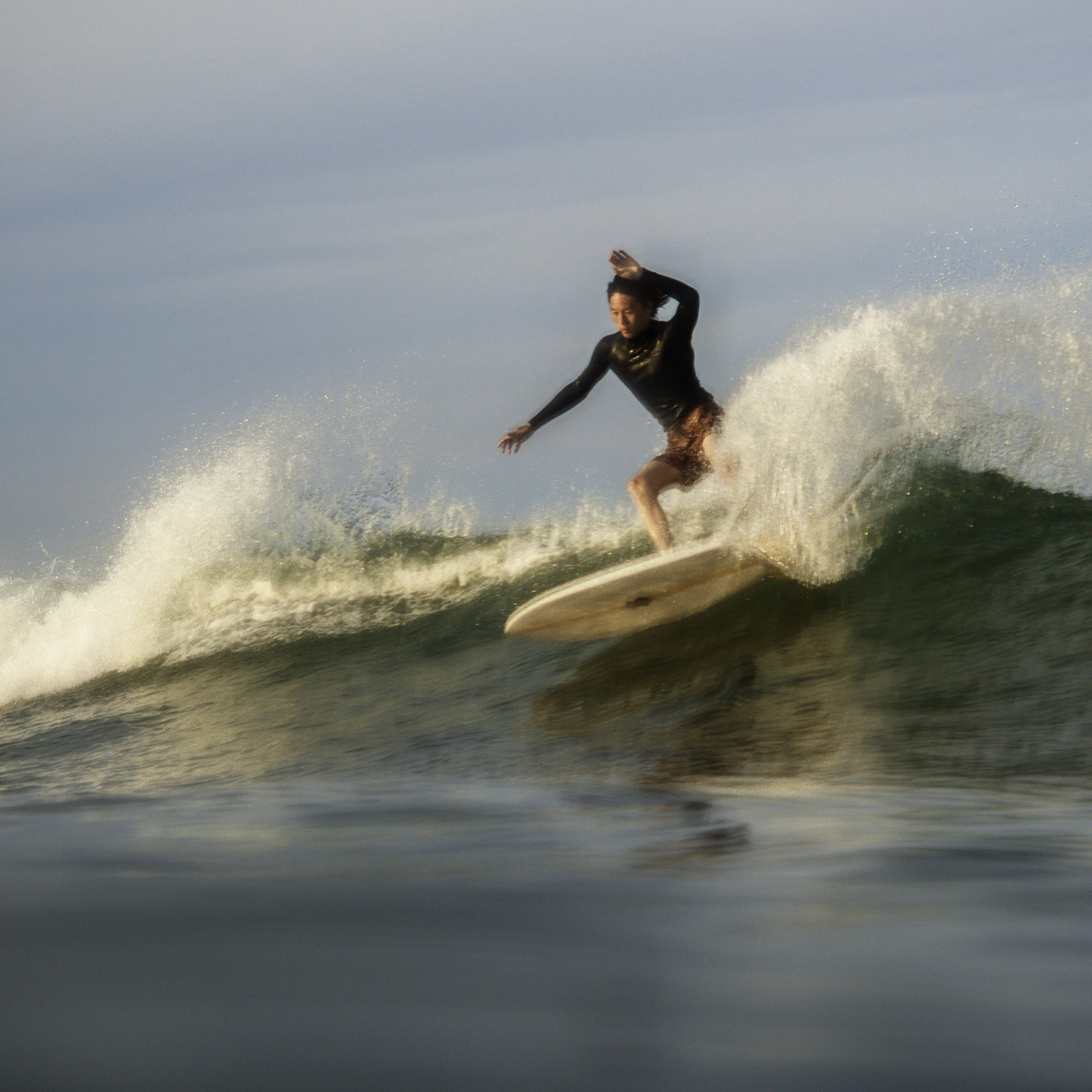
Miyazaki Prefecture in southeastern Kyushu is attracting a major wave of migration from other parts of Japan. We explored this sunny region's vibrant surfing culture, the small businesses and communities established by these newcomers, and the local design initiatives found in the historic castle town of Obi.