From Tokyo to Takamatsu on the Last of the Sleeper Trains
Illustrations: Ayaka Takase/Words: Kenji Hall
What the overnight train to Shikoku lacks in practicality, it makes up in romance
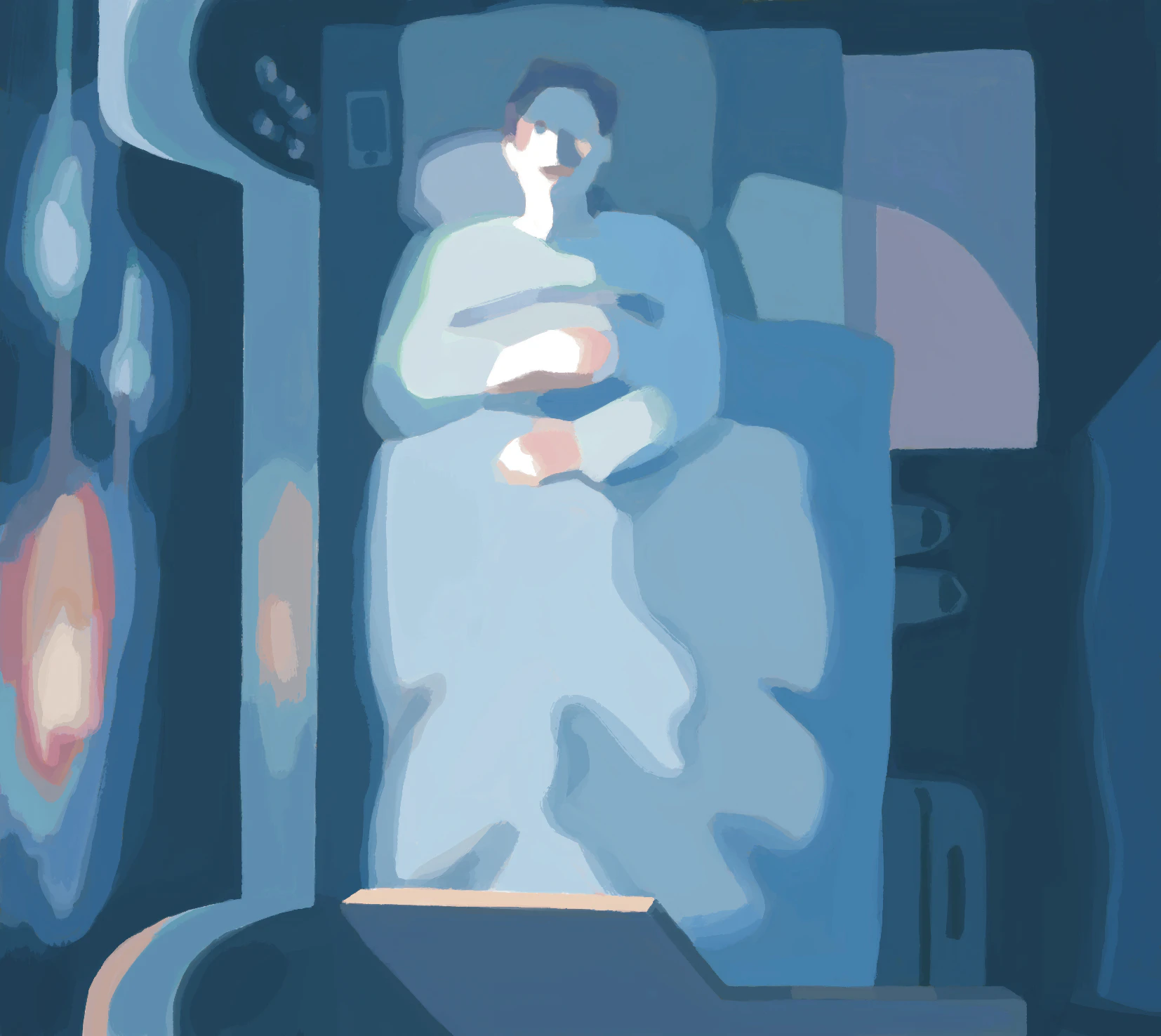
Forty minutes to departure, and I’m eighth in line on the train platform at Tokyo Station. It’s after 9 p.m. on a subzero Monday in mid-January, and every few minutes another suitcase-laden traveler joins the silent queue behind me to board a very special train: the twin sleeper night trains Sunrise Seto and Sunrise Izumo, which leave Tokyo connected and then split up midway. There’s no need for any of us to be this early. The train doesn’t depart until 9:50 p.m., and it’s yet to arrive. Moreover the train is already sold out, and every berth is assigned. I snagged a private compartment: Car 2, Room 27. I could have turned up minutes before departure, but then I would miss out on a big part of the excitement. Tickets are hard to come by, and there’s no telling when I would have another opportunity like this. To make sure I didn’t miss anything, I drew up a to-do list. The first part of the experience is the buildup to the moment when the train pulls into the station. I was heading to Takamatsu, a seaport facing the Seto Inland Sea on the southwestern island of Shikoku. I was drawn to the Sunrise Seto for the romance of the ride: an old-fashioned, nine-hour overnight rail journey. I would go to bed in Tokyo and wake up 800 kilometers away, as the sun was breaking over the horizon. It felt like time travel. Shut my eyes here, open them there. When JR unveiled the Sunrise Seto and Sunrise Izumo in 1998, demand for sleeper trains was already in decline. They were the same price as flights and the bullet train but much, much slower. This made them an impractical choice at odds with the belt-tightening, economic stagnation and corporate efficiency of the times. The Sunrise trains had one remaining practical advantage: Travelers could leave after the latest Shinkansen and domestic flights and reach their destination before the earliest of the next day’s arrivals. Today the Sunrise Seto and Sunrise Izumo are Japan’s only remaining shindai-ressha (sleeper trains) with daily service.
COVID-19 dented ridership for a time, but in Japan’s current tourism boom, the berths are snapped up within hours of going on sale, one month in advance. And there are signs that sleep trains might be making a broader comeback. In spring 2027, East Japan Railway ( JR East) will test the market with a redesigned overnight train between Tokyo and northern Japan, which will have compartments with flat-lying seats that accommodate up to four people. This would be my second time to ride the Sunrise Seto. When I took it eight years ago, my five-year-old son and I occupied our own two-bed compartment. We didn’t do much—we read, stared out the window, mapped out the next day—but we still talk about it as one of our greatest adventures. So I wasn’t about to just spend the trip sleeping. I crammed a lot into my to-do list. I wanted to socialize with other passengers in the lounge car, stroll the corridors, read in bed, and identify constellations from out the wide windows. At 6:40 a.m., I planned to hop out to see the seven minutes where the train split into two at Okayama station and watch the sunrise over the Seto Inland Sea. I was also hoping to shower, because I had never taken a shower on a moving train. The Sunrise Seto has space for more than 150 passengers but only enough water for 20 showers. I needed to quickly obtain one of the shower cards, sold at ¥330 apiece from a vending machine. So this gave me further reason to be early on the train platform. At half past nine, I was giddy as the train pulled into Tokyo Station. Within minutes of the doors opening, I was feeling triumphant: I had my shower card.
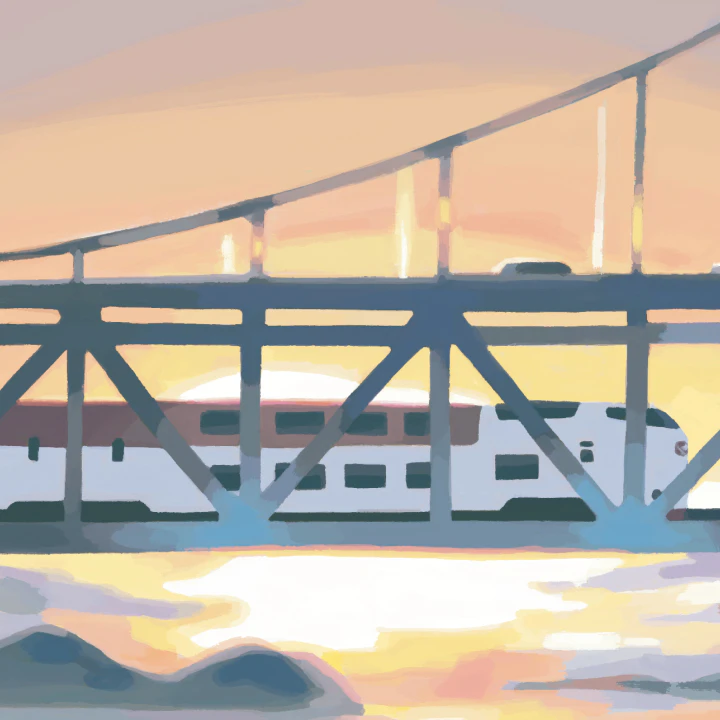
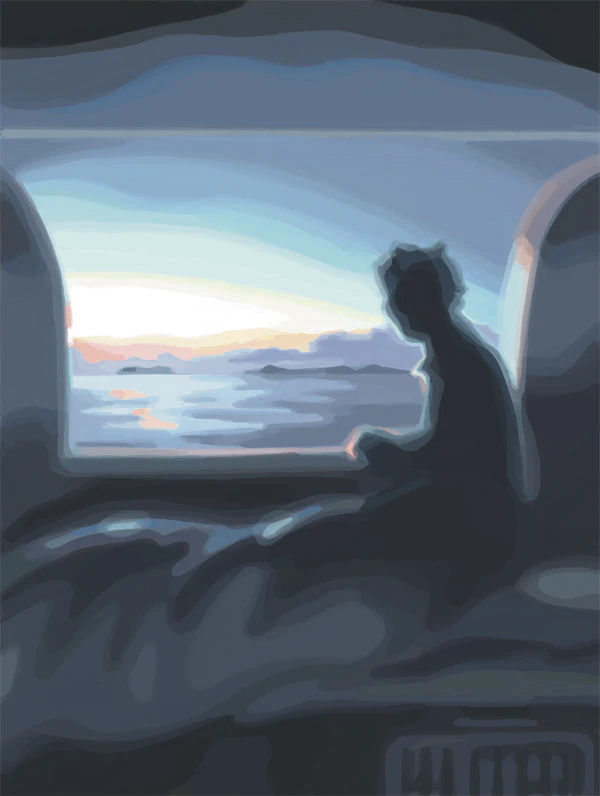
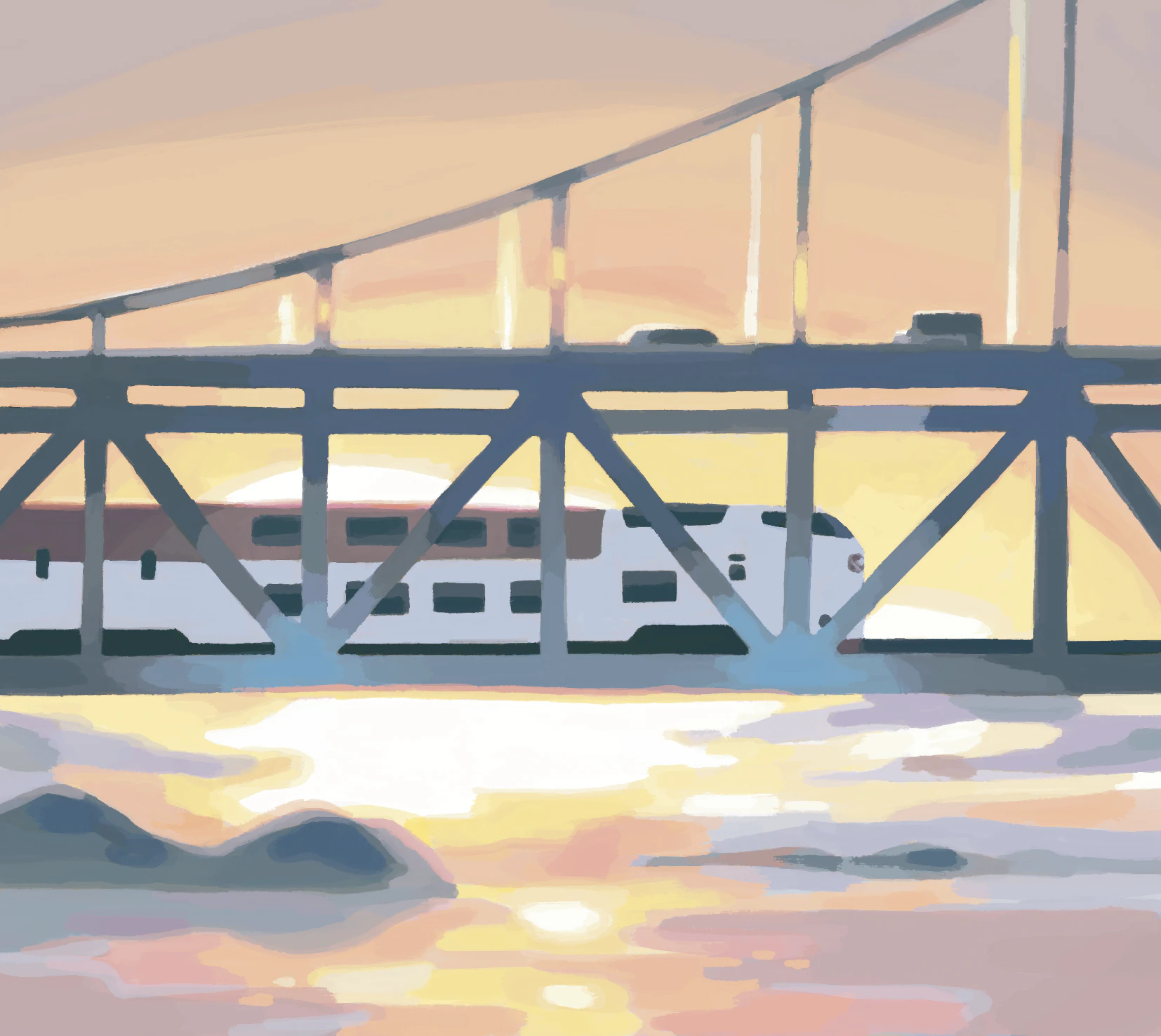
As we reach Himeji Station at half past five, it’s time for my shower. My card entitles me to six minutes of hot water. A countdown clock with “Stop” and “Go” buttons tells me exactly how long I have left.The early rise also means I now have plenty of time to throw on my coat and shoes and head outside when the train stops at Okayama Station. This is where the Sunrise Seto and Sunrise Izumo part ways. When I watched the workers in helmets and orange coats separate the 14-car train, it felt like a turning point in the journey. From here on, the train turned south, and as the sky brightened, we headed across the Seto Ōhashi Bridge. What could be better than sitting up in bed in your pajamas and gazing out at the dark, rippled surface of the Seto Inland Sea with sleep in your eyes? We slid into a deserted Takamatsu Station at around 7 a.m. The crisp air smelled of diesel fuel and the sea. Near the turnstiles, the tracks ended at a buffer stop. On the station’s electronic sign boards, there was not even a mention of the Sunrise Seto. Its presence was a nonevent here, but my fellow-passengers and I knew better. We’d been transported to a time when the night train was the equivalent of jet-setting around the archipelago. Minutes later, the station’s stillness was broken by the screech of railcar brakes and the echoing footfalls of the morning’s first wave of commuters.
NEW
SETOUCHI