ONOMICHI
Photography: Hinano Kimoto/Words: Sam Holden
“What a lovely place. From the moment I stepped off the train, I’ve felt so nice. What’s it called?” “It’s Onomichi. Go on, say it.” “O-no-michi…?” “It’s a lovely place, close to the hills and the sea.” Fūkin to Sakana no Machi, by Fumiko Hayashi
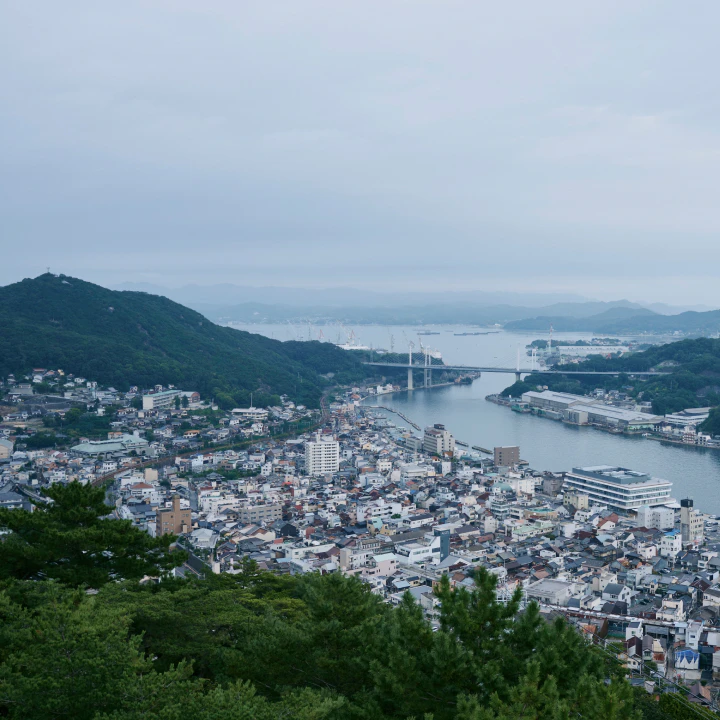
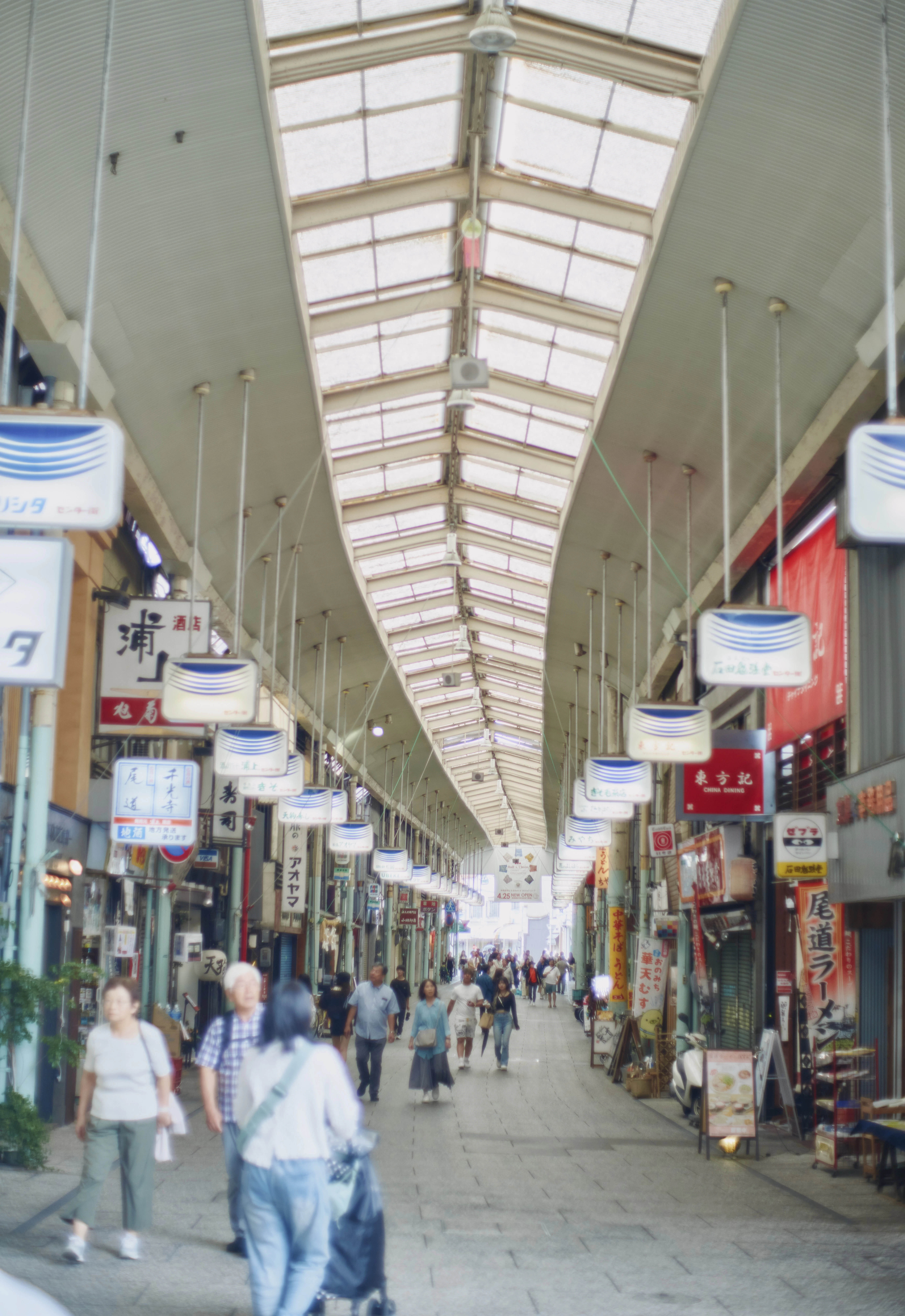
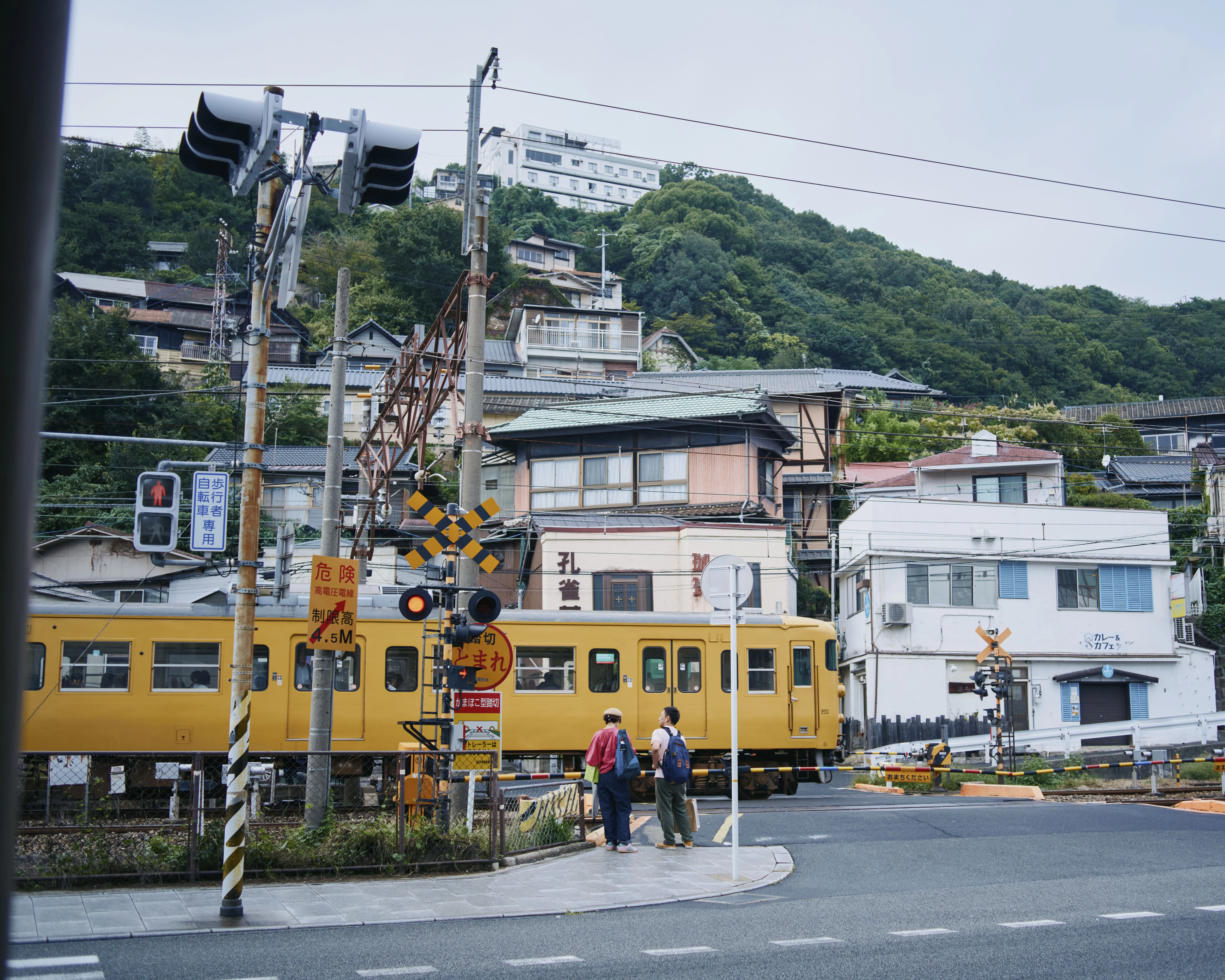
Throughout its 850-year history as a port city, Onomichi has welcomed–and enchanted—those who pass through. In the 14th century, wealthy lords and merchants funded extravagant hillside temples, and it prospered during the Edo Period as a stopover on the maritime trade route linking Osaka and the Sea of Japan. In the 20th century, celebrated writers and directors like Shiga Naoya and Yasujirō Ozu immortalized its stair- cases and vistas in novels and films, and its charms attracted many couples on honeymoon. In recent years, Onomichi has re-emerged in the Japanese consciousness, and not just as the northern anchor of the Shimanami cycling route. The port town stands as a living testament to the possibilities of reviving mid-sized Japanese cities. Not only have major local enterprises invested millions into infra-structure to attract more tourists, but newcomers have arrived to open small businesses and renovate abandoned houses. The success of Onomichi is only possible when individuals and institutions of all sizes are actively working towards similar goals in their own ways. Onomichi Station quickly orients visitors to the city’s unique geography. To the south unfolds the waterfront along the narrow Onomichi Channel packed with ferries and ships. To the north rises Senkoji Hill, a frozen-in-time landscape of wooden temples and houses, cat-filled pathways and steep stone stairs. The city’s downtown occupies the flat land that lies between, centered on a long, covered arcade that serves as an unofficial town square.
LOCAL INDUSTRY’S COMMITMENT TO A CHANGING ONOMICHI
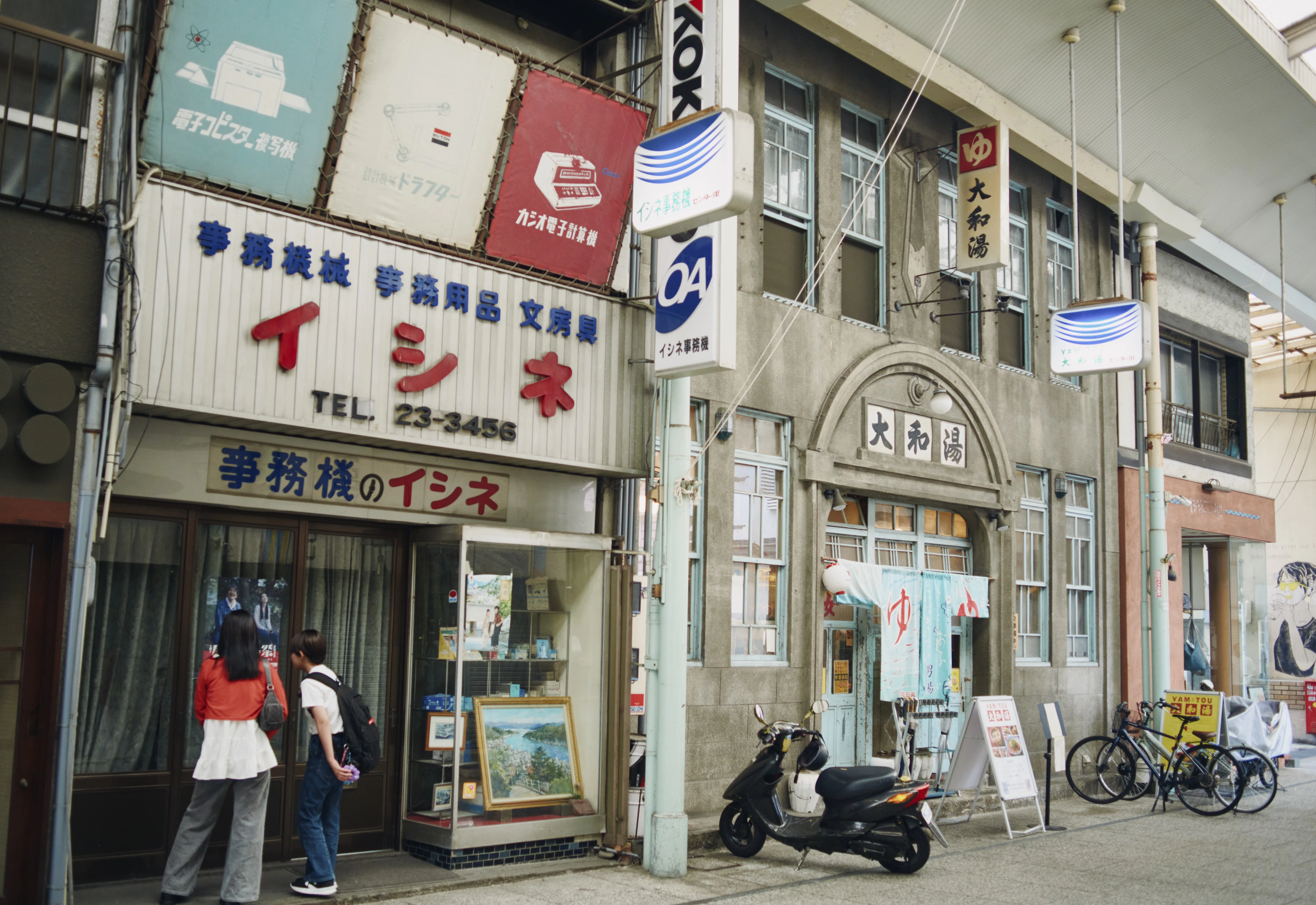
Life under the arcade still revolves around everyday rhythms of schoolkids on bicycles who race off the morning ferries arriving from Mukaishima, and the regulars who drop in for breakfast at the classic kissa café Bara-ya or wait for a bowl of udon at Miyachi’s lunch counter. But the timeless atmosphere obscures how much the city has changed in recent decades. In the arcade’s heyday thousands of hillside residents filled its bustling grocers, shops, and eateries. After Onomichi began to sprawl into suburbs in the 1970s, the population in the central city fell by almost three quarters. The hollowing out of the city, however, opened up the opportunity for new actors to breathe life into the arcade. The old shops are now intermixed with a wave of new cafés, bakeries, cycle shops, restaurants and hotels catering to the recent influx of travelers. Entrepreneurs understand that tourists are drawn to the retro landscape, and so they have worked to reimagine classic buildings. One of the best examples is Yamato-yu, a former public bath that local company Ittoku repurposed into a popular Taiwanese dumpling restaurant. One storefront in the arcade, made from the reused wooden doors and windows of an elementary school class-room, has played an especially important role.
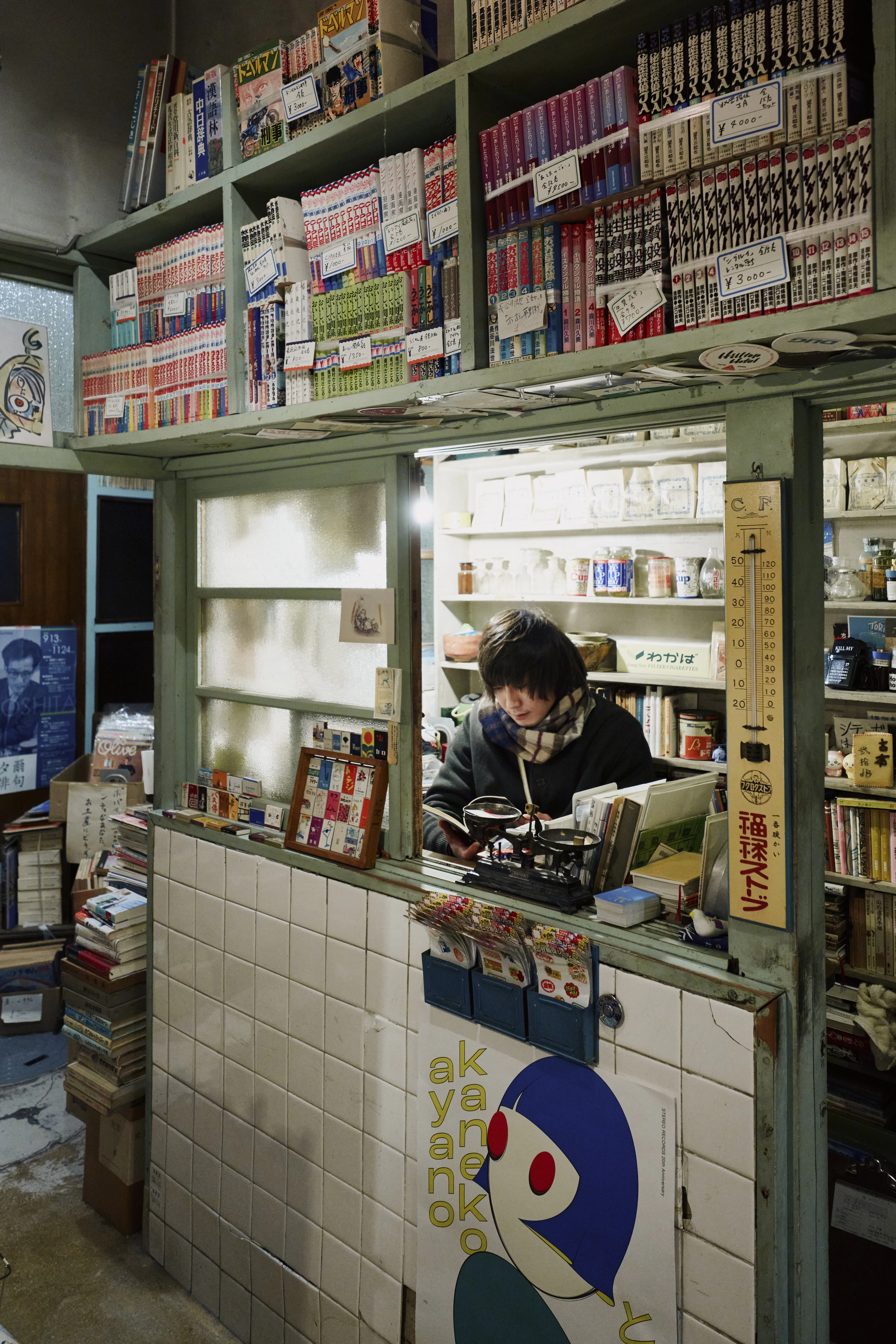
Anago no Nedoko opened in 2012 as the first guesthouse of Onomichi Akiya Saisei Project, a non-profit known locally as Aki-P. For nearly two decades, the organization has energetically pursued its mission of saving Onomichi’s unique cityscape. In the process, it has cultivated a community of renovators and turned numerous historic buildings into low-rent shops, event venues, living spaces, and accommodations, often with their trademark bricolage aesthetic. Aki-P’s frequent events and volunteer activities facilitate interaction and sharing of knowledge among those who are already, or thinking about, fixing up buildings. Importantly, their guesthouses also serve as entry points into the Onomichi renovation world for outsiders (including this author) who are encouraged to return to the city and pursue their own projects. The full extent of Onomichi’s renovation culture, however, is not clearuntil venturing beyond the main street. “Onomichi is composed of a series of side streets,” the director Nobuhiko Ōbayashi once wrote about his home town. “Anyone, upon wandering its lanes, will end up lost.” The alleys to the north of the arcade frame picturesque staircases that head straight up the hill; between the arcade and the sea, a web of backstreets hide small restaurants and retail shops. It’s here that American Peter Card and his partner Momoko run the vintage clothing shop Tastemaker in a tiny, two-story corner space that is every bit as retro as their wares. The existence of many small spaces in need of repair make it possible for new creative businesses to find their footing and experiment.
NEW
SETOUCHI