The Living Tradition of BINGO INDIGO
Photography: Ichi Nakamura/Words: W. David Marx
The Fukuyama area of Hiroshima has become the production base for Japan’s world-famous artisanal denim by hybridizing older traditions of indigo dyeing with a modern reverence for classic American jeans.
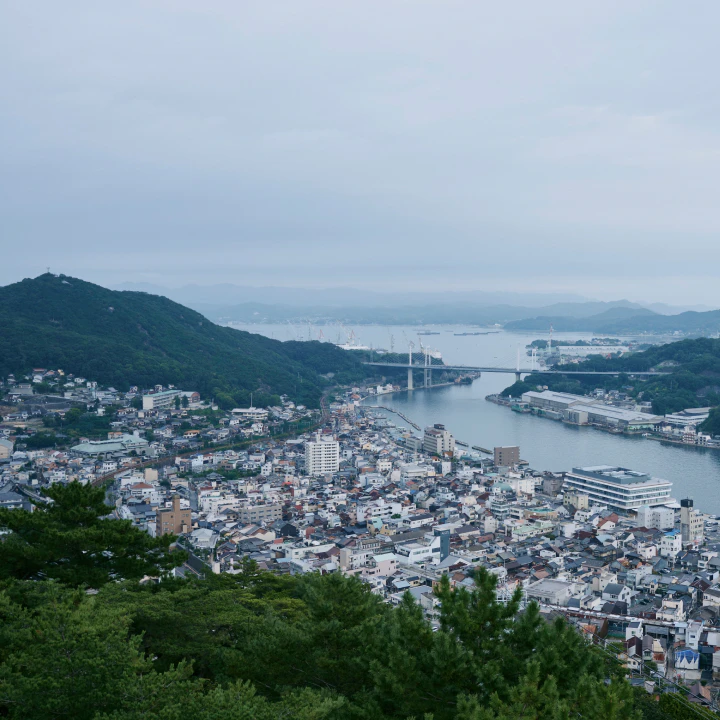
Early Japanese civilization borrowed many of its core ideas and aesthetics from China: Buddhism, Confucianism, specific crafts and architectural forms, and even the written language. Alongside these importations came indigo dyeing (aizome), which first appeared in Japan more than a millennium ago. Japanese dyers then perfected the technique in their own ways, working across the country year-round to provide beautiful and functional garments in the signature blue color for nearly everyone, whether aristocrats in palaces or peasants out on the fields. And by the end of the feudal era, the Bingo region of East Hiroshima, with Fukuyama as its center, became legendary for its indigo-dyed bingo kasuri garments. As the wane in traditional Japanese clothing and the heavy reliance on synthetic dye triggered a decline in local indigo production, the Bingo area shifted towards dynamic new industry: denim. The Kojima area of Okayama, with its sewing factories, may have staked a claim as the birthplace of Japanese jeans, but Japan’s world-famous denim fabric has its roots in Bingo. Today the region remains the best place in Japan to experience aizome at both micro and macro levels. This ranges from the small-scale agriculture and hon-aizome hand-dyeing of Aiya Terroir and the artisanally-made jeans of BoleeGa, to the industrial denim production of Kaihara, which supplies many of the world’s most beloved apparel brands
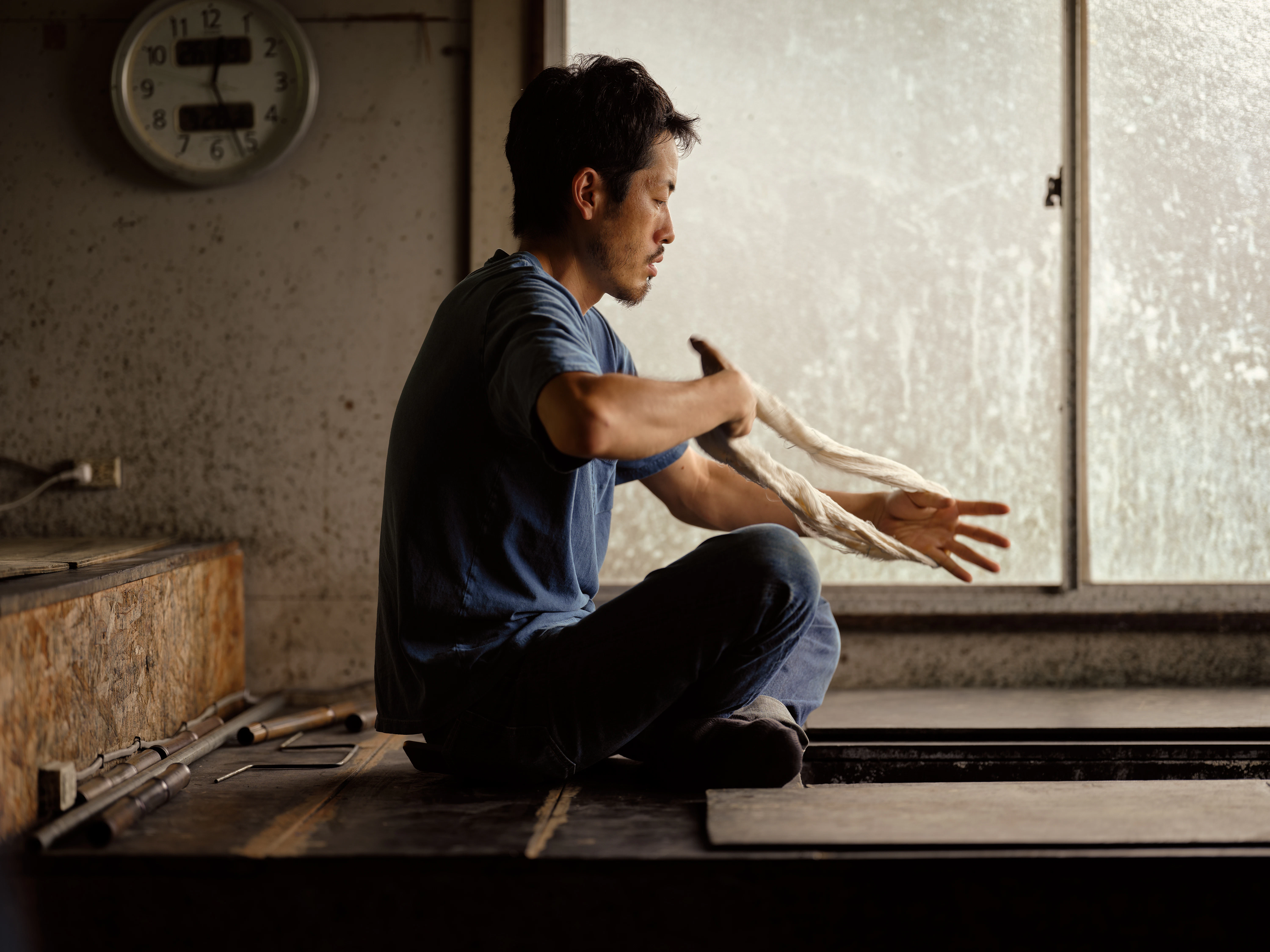
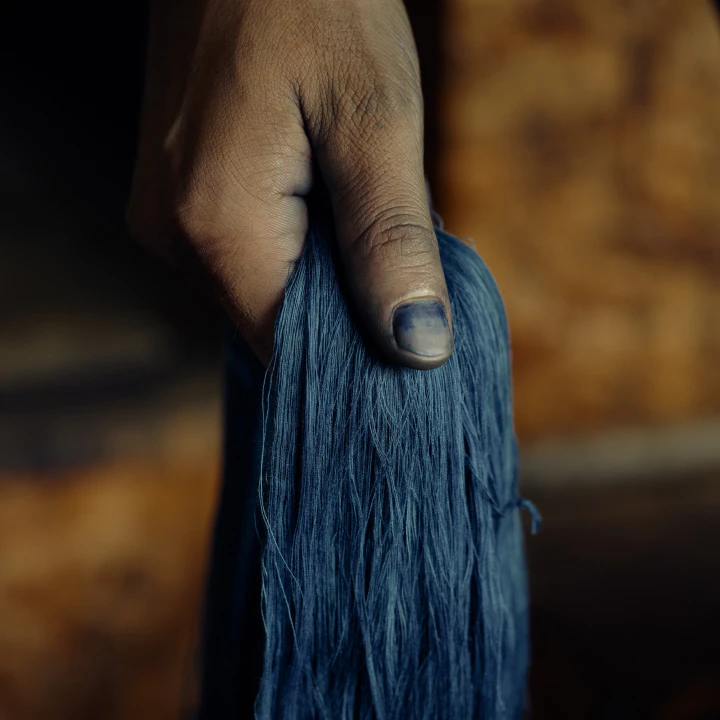
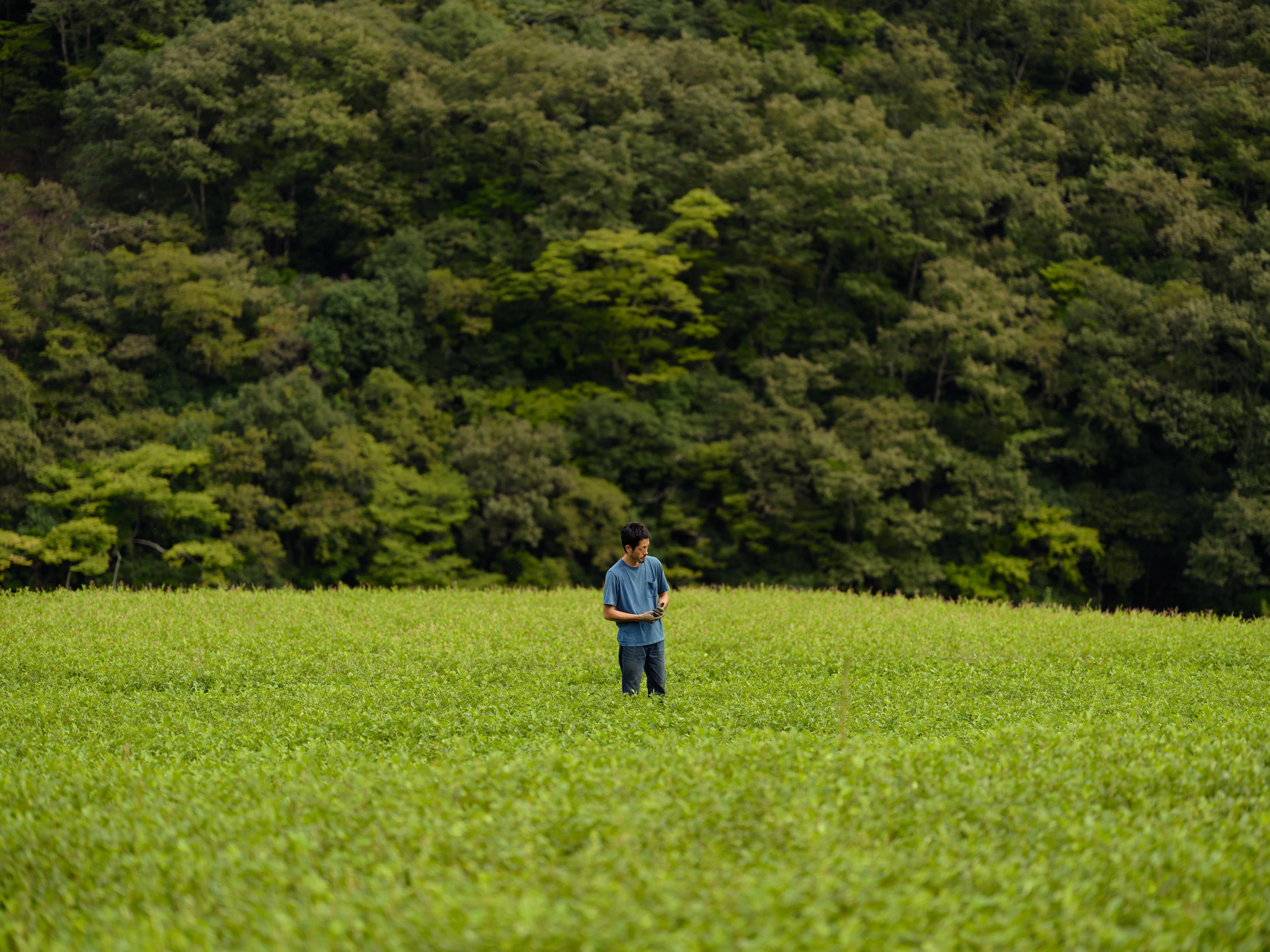
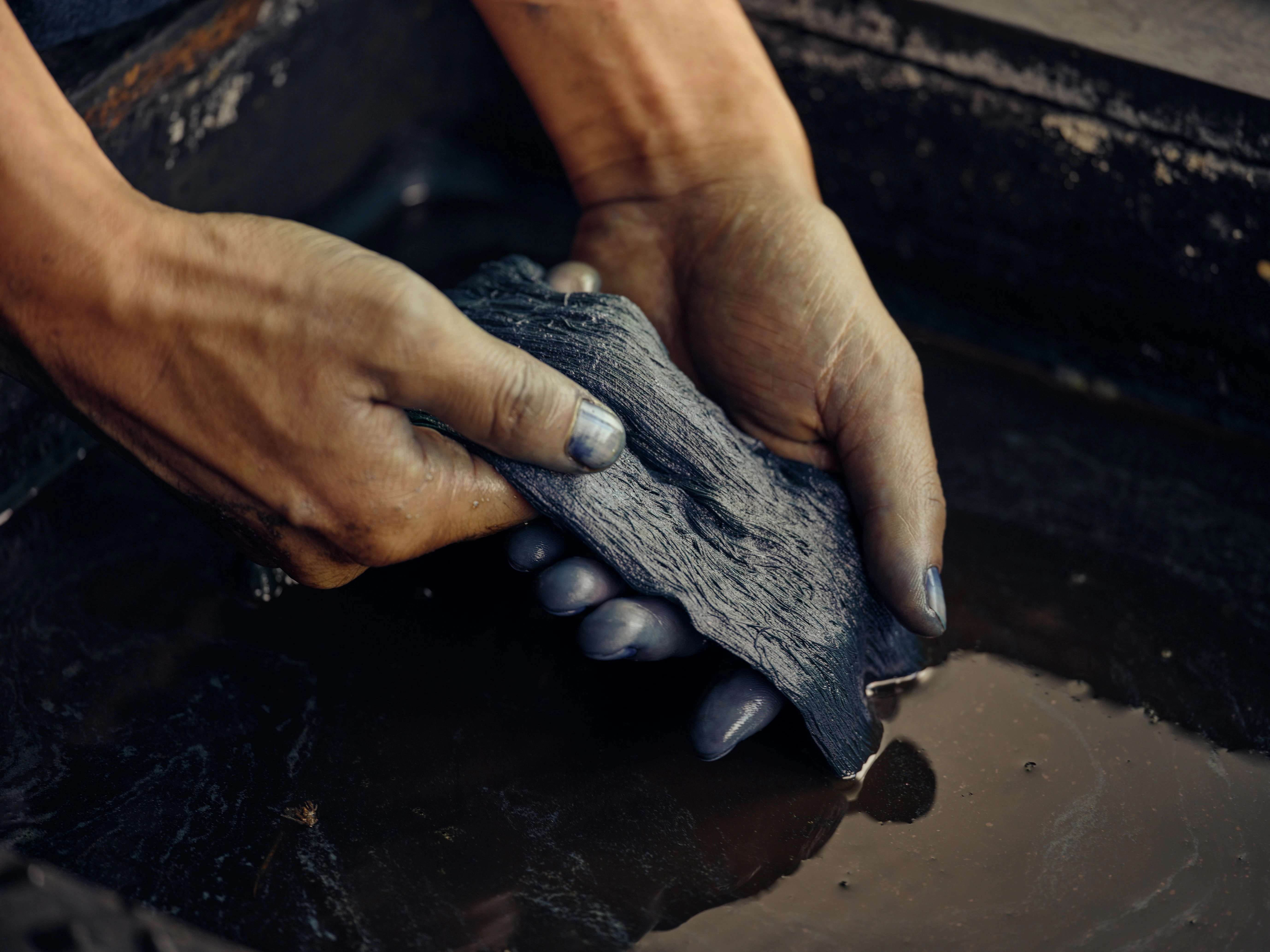
“I should have a better answer for why I did this,” admits Kenta Fujii, the pro- prietor of Aiya Terroir near Fukuyama. “But it all started when I was working as an office worker doing advertising sales. During a day off, I had the chance to try out indigo dyeing, and I was blown away by how beautiful the colors were. It was hard to believe they were made entirely from natural ingredients.” He was so stunned by indigo, in fact, that he decided to quit his full-time job and refocus his life on tilling the earth. In the tiny town of Yamatocho within the larger Fukuyama area, he opened a new business called Aiya Terroir—aiya meaning “indigo dyer” and “terroir” referencing the “total natural environment” concept most often used in the wine industry. Fujii’s idea was not just to revive natural indigo agriculture, but to bring together all the parts of the dyeing process under one roof. He and his team work the soil, plant the indigo, and then select and sun-dry the leaves. The best leaves are then fermented into sukumo dye for on-premise dyeing. This end-to-end process is also highly environmentally sustainable, as the unnecessary indigo stems are mixed with local cow compost to be reused in the soil of the fields. Indigo cultivation is a one-year cycle, beginning with preparation of the soil in February. Spring is the time for sowing the seeds, and the leaves are then ready to be harvested by summer. In October, Fujii begins the process of fermenting the dried leaves into indigo dye. This takes around four months, with 18 weekly “cutbacks”—breaking down the pile to supply oxygen and water. Aiya Terroir uses the resulting sukumo material to offer dyeing on-site. Compared to synthetic dyes, indigo is very inefficient, as a basic dyeing process tends to only settle the indigo on the outside of yarn rather than permeate to its core. But this inefficiency is exactly what gives indigo its charm for jeans: garments fade with a whitish patina that is particular to indigo. In the traditional Japanese hon-aizome method used by Aiya Terroir, however, the dye is pressed so hard into the yarn that garments stay deep blue with very little fading. To use this old technique on jeans makes them not only time consuming but very expensive. Aiya Terroir has produced and sells its own 100% natural indigo dyed yarn luxury jeans for ¥250,000 per pair. The development alone took three years and only 50 were produced. In this, we see the underlying tension in contemporary indigo dyeing: the most premium methods are so labor intensive that they are best understood as artisanal craft rather than a means of large-scale manufacturing. Yet Fujii believes that indigo dyeing “needs to be shifted to become an industry.” Aiya Terroir’s next challenge is making the project financially sustainable for the long-run. One part of this process is consumer education: To understand the true value of traditionally-dyed garments, “there need to be more opportunities to come into contact with the products.” Take this as an invitation to visit Aiya Terroir and learn about the magic of indigo dyeing. The experience changed Fujii’s life—and maybe you’re next.
NEW
SETOUCHI