Yushi-dofu at TOFU HIGA
Photography: Hinano Kimoto/Words: Kenji Hall
Ishigaki’s favorite breakfast spot serves up warm bowls of salty tofu.
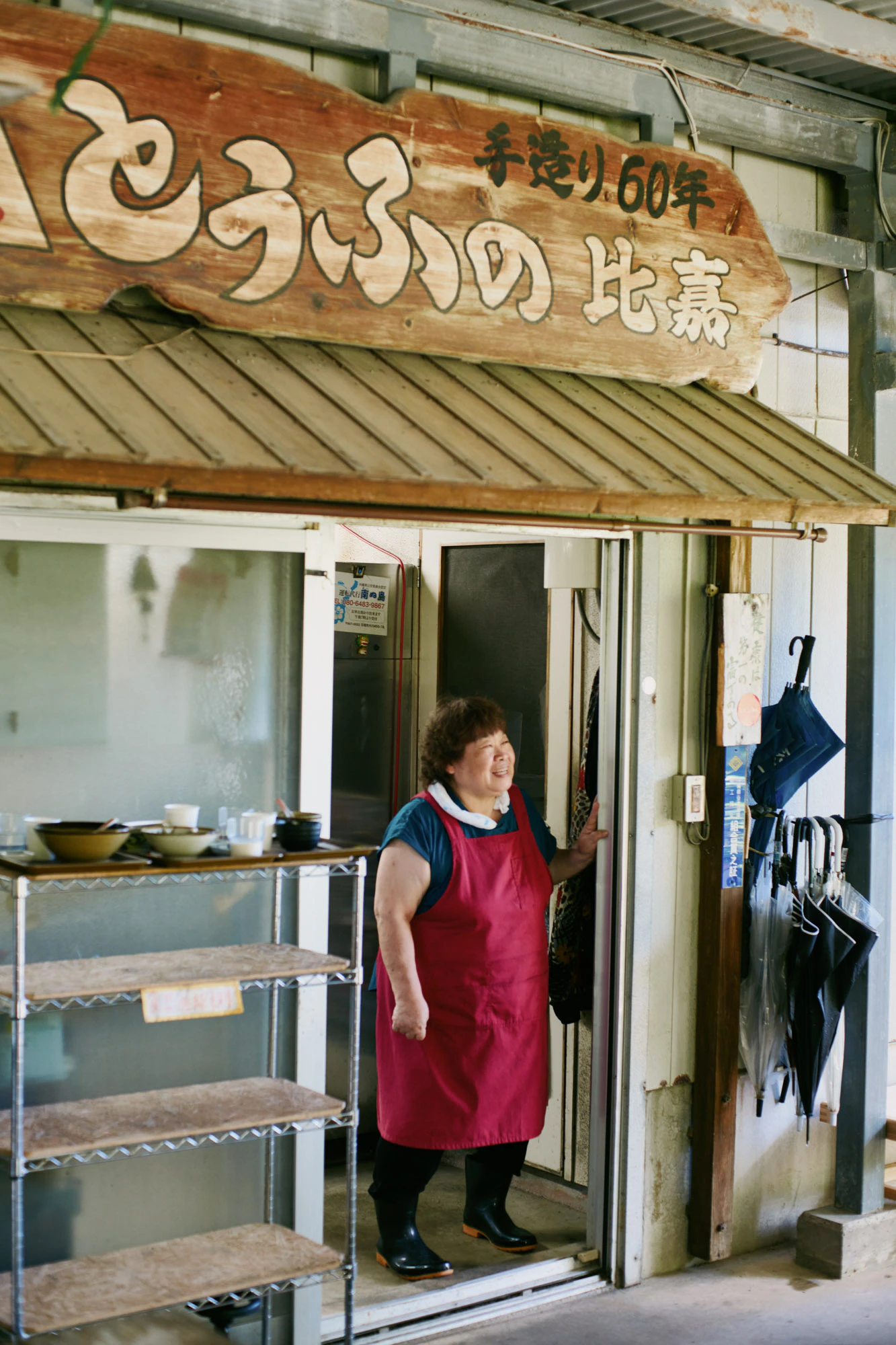
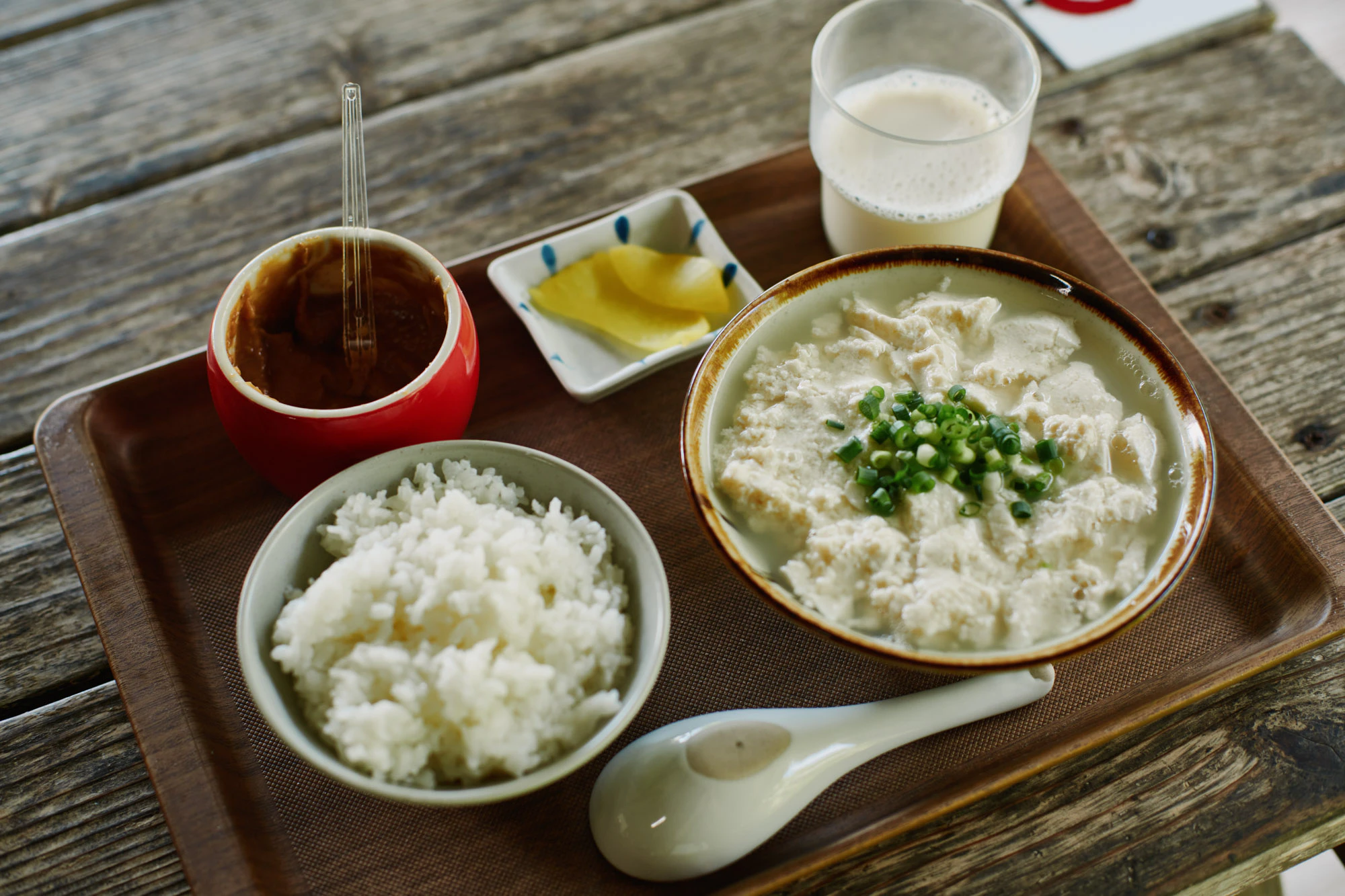
The only way to reach Ishigaki’s most popular breakfast spot, Tofu Higa, is to drive down an unpaved farm road that weaves through a long stretch of banana groves. But customers evidently have no problem finding the restaurant. The most eager patrons start queueing long before the shop opens at 6:30 a.m. By that time Teiji Higa, the 73-year-old third-generation owner-chef, has already been toiling away in the kitchen for nearly five hours. Tofu Higa’s specialty is an Okinawan comfort-food classic: yushi-dofu, a soft jumble of lightly salted, warm tofu. Higa offers yushi-dofu in many forms: with Yaeyama noodles, on top of rice, in miso soup, or in its own clear broth. Some sets come with a side of soy milk or pan-fried okara, the fiber-and-protein-rich soybean pulp that’s left from making tofu. Higa, 73, runs the shop with his wife, Akemi, and their two daughters, Akiko and Yuko. He inherited the business from his mother, who inherited it from her mother, who started making tofu and selling vegetables grown in her garden around 70 years ago. In 2005, Higa moved the shop to its current location—a basic metal shelter with bamboo blinds, ceiling fans, and wooden benches to accommodate the breakfast crowd. “We make around 100 meals a day,” says Akemi.
Okinawan yushi-dofu is richer and saltier than tofu made elsewhere in Japan. This derives from the way Okinawans make soy milk from uncooked soybeans that have been soaked, ground, and pressed. When the soy milk is simmered with salt and nigari (bittern), it coagulates into loose tofu curds. Tofu Higa also sells the firmer, denser shima-dofu that’s made when yushi-dofu gets poured into wooden molds and pressed until much of the water is drained out. Higa belongs to the long tradition of tofu-making in Okinawa that’s thought to date back to the 14th century, when the islanders first initiated trade with China. In the shop’s low-tech kitchen, small variables, such as the weather and the condition of the soybeans, can have a big impact on the flavor. Adjusting for those variables is Higa’s secret to producing consistently delicious tofu, says Akemi. That dedication to quality partly explains Higa’s reluctance to expand his operations, despite the long queues during the peak tourism season. When you visit, plan on an early breakfast: The yushi-dofu meals usually run out before 9:30 a.m.
New
MIYAZAKI

Miyazaki Prefecture in southeastern Kyushu is attracting a major wave of migration from other parts of Japan. We explored this sunny region's vibrant surfing culture, the small businesses and communities established by these newcomers, and the local design initiatives found in the historic castle town of Obi.