Akiko Ishigaki, Living Legend of Japanese Crafts
Photography: Hinano Kimoto/Words: Ben Davis
This weaving and dyeing artisan has become well-known across Japan for her role in preserving Yaeyama craft traditions and tying them to contemporary art, fashion, and design
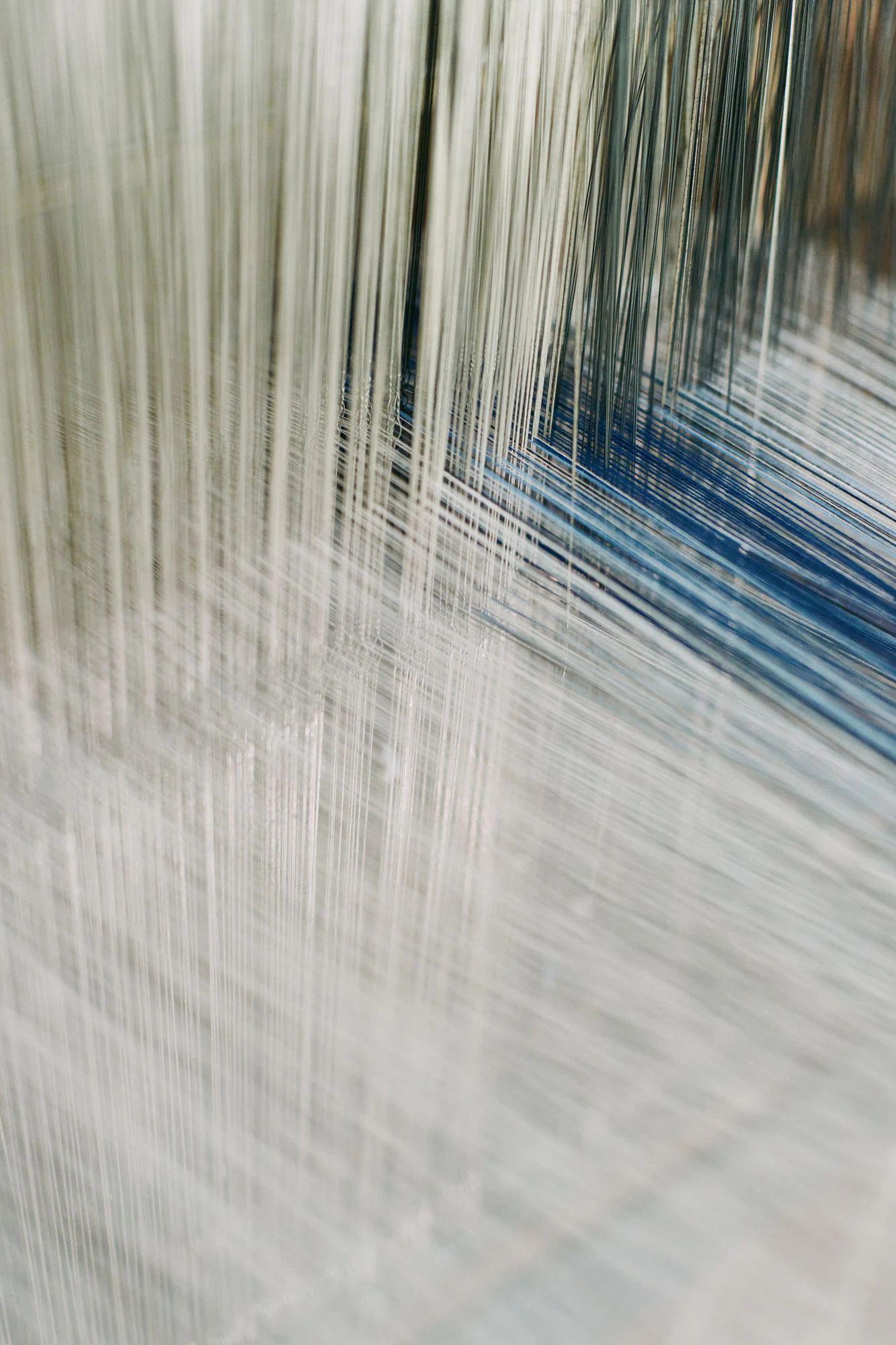
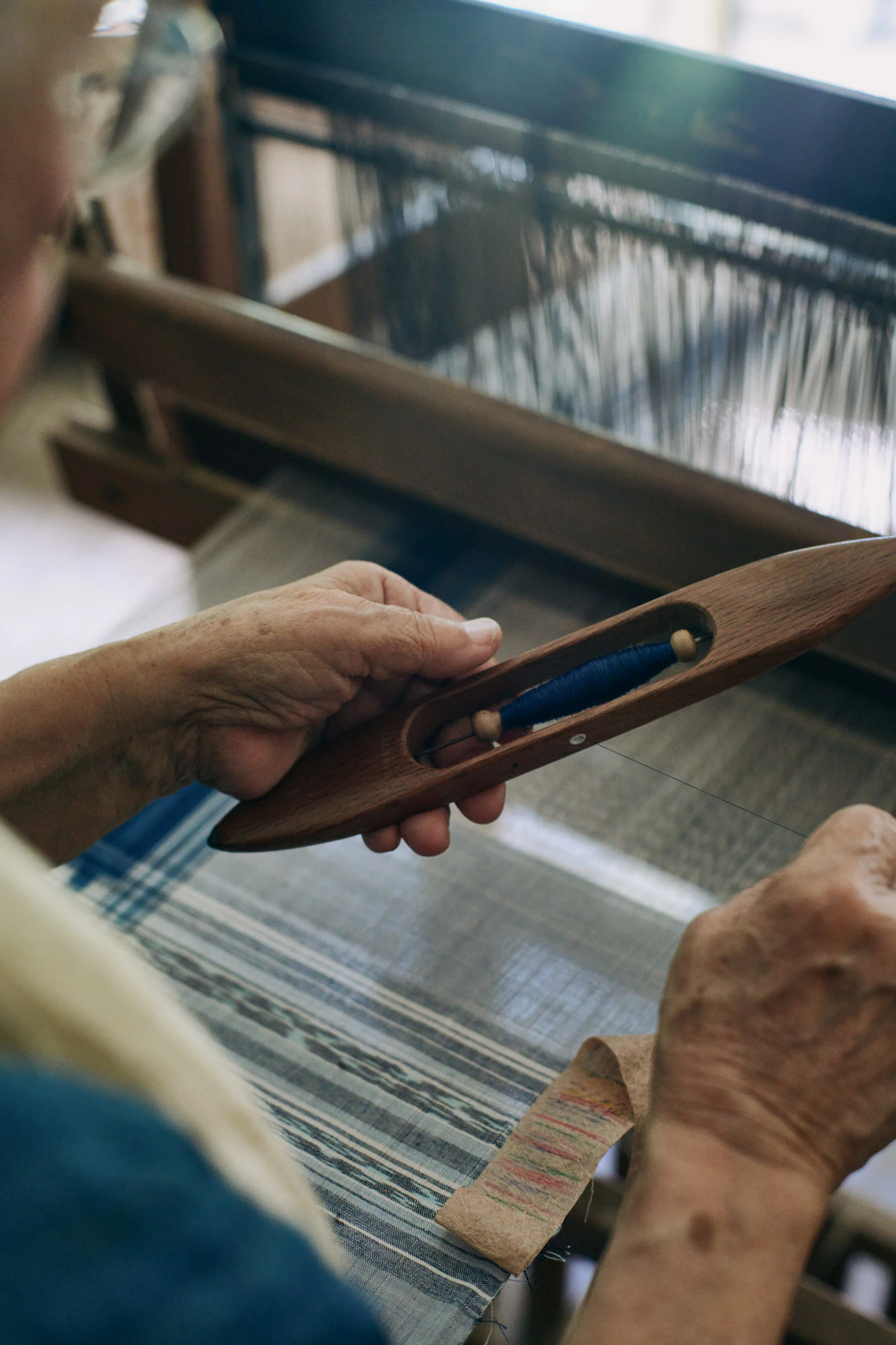
“Some people talk about coexisting with nature, but I don’t think that’s right,” says Akiko Ishigaki, gazing out the window from her workshop in the Uehara area of Iriomote Island. “Nature is so much greater than humans. We shouldn’t get ahead of nature. Instead, we must constantly learn from its perspective. After all, nature was here first, tens of thousands of years before humans.” The Iriomote air is thick with early summer humidity as a gentle breeze murmurs through the sprawling yuna (island hibiscus) trees. Pausing every now and then to wipe her brow, Ishigaki works away at one of the looms, adding her own twists to the five-and-four square pattern of traditional Yaeyama minsah. “Villagers have long believed that the Iriomote cats are mountain gods, and so when coming across them in the wild, they pray and ask for a plentiful day’s harvest. That’s just one of many traditions on this island.” Born on nearby Taketomi in 1938, the acclaimed weaver and dyeing artist studied in Tokyo and trained in Kyoto, before returning to the island to weave Taketomi-style textiles. “The first time I sat at my grandmother’s loom, I was still in elementary school and my feet couldn’t even reach the pedals!” she says with a laugh. “I never really thought about becoming a weaver, it was just a part of everyday life.” The story of her Kuuru-Koubou workshop began in 1980, when she opened it with her late husband and Iriomote local Kinsei Ishigaki. In the five decades since, she has played an instrumental role, alongside Kinsei, in reviving Iriomote’s weaving and dyeing traditions, as well as restoring traditional costumes and establishing the island’s center for handicrafts. She’s also worked with the broader Japanese fashion industry. In 1992 she collaborated with Issey Miyake and co-founded her own brand Maapai in 1998 with the textile designer Chiaki Maki and fashion designer Michiyo Masago.
“Taketomi is a tiny island with a rich culture of performance, song, dance, and traditions, but there isn’t much nature,” says the 86-year-old. “But when I arrived here in Iriomote, the human culture was disappearing, but there was so much nature.” At that time, the impact of the coal mining industry, which operated from the late nineteenth century through to 1960, had left its mark not only on the island’s economy but the local way of life. Not far from the nearby Urauchi River, a trail leads through dense forest to what remains of the Utara Coal Mine. “After the mine closed, my husband sought to revive the island’s culture. In this part of Asia there’s an incredible number of plants and natural dyes, many of which aren’t even found on mainland Okinawa, so that became our focus,” she says. “Farming alone isn’t enough to survive on this island, so he believed that the culture of everyday life can be a most powerful force.” While the division of labor is common in other textile regions of Japan, Ishigaki is involved in each and every stage of production. This extends to cultivating an environment that produces the raw materials required to weave and dye textiles. Beyond the confines of the low-slung building where weaving takes place, the surrounding gardens, fields, mountains, and mudflats are a treasure trove of ingredients. There’s choma, ramie, and ito-bashō (thread-banana) plants grown for their fibers and mulberry trees for nurturing silkworms, while indigo varieties, kuuru (dyeing yam), and mangroves provide pigments for dyeing. The mountain supplies fresh water, another essential element in the dyeing process, as well as wild vegetables. Rice fields still play a key role in islanders’ largely self-sufficient way of life.
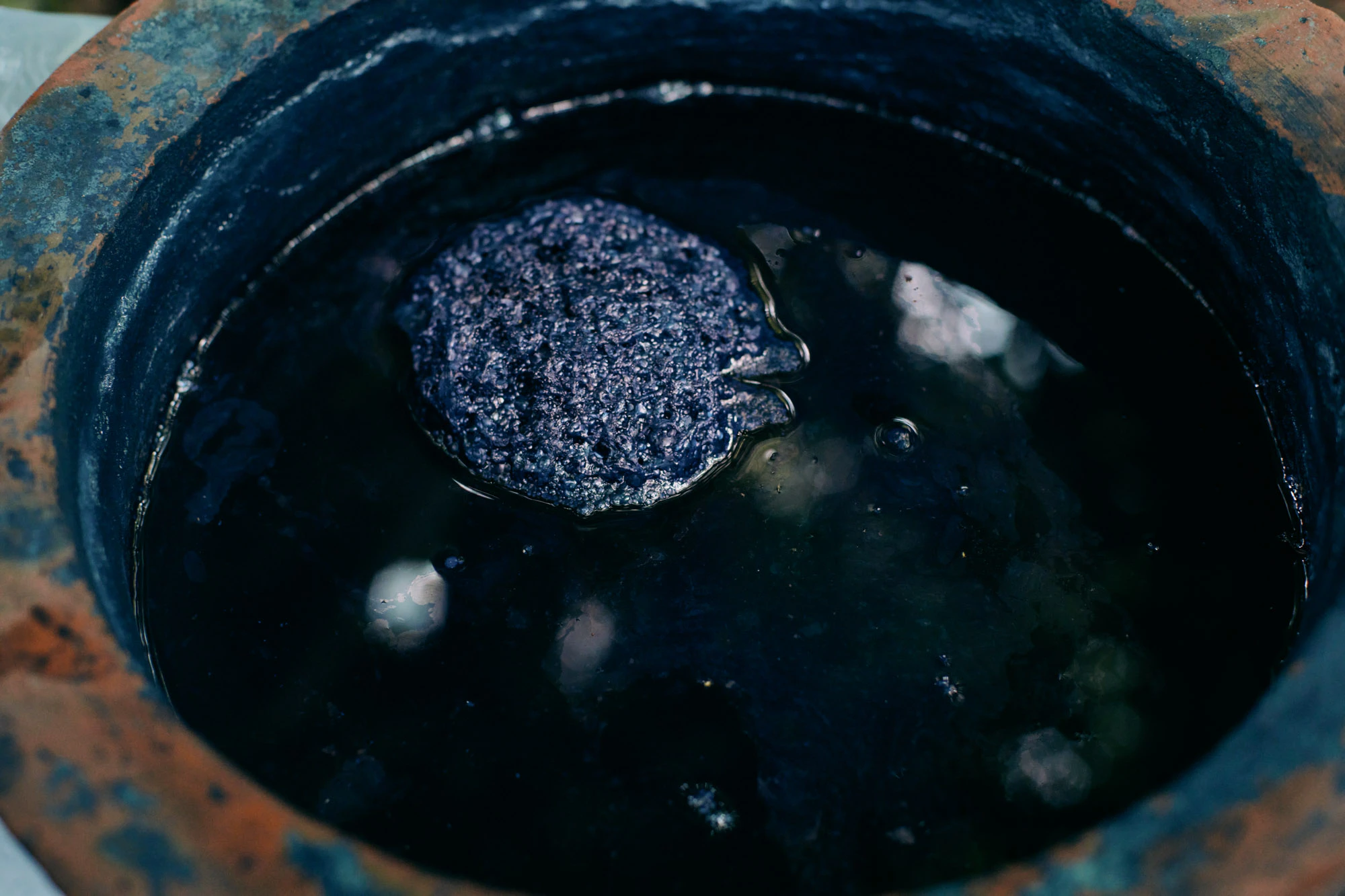
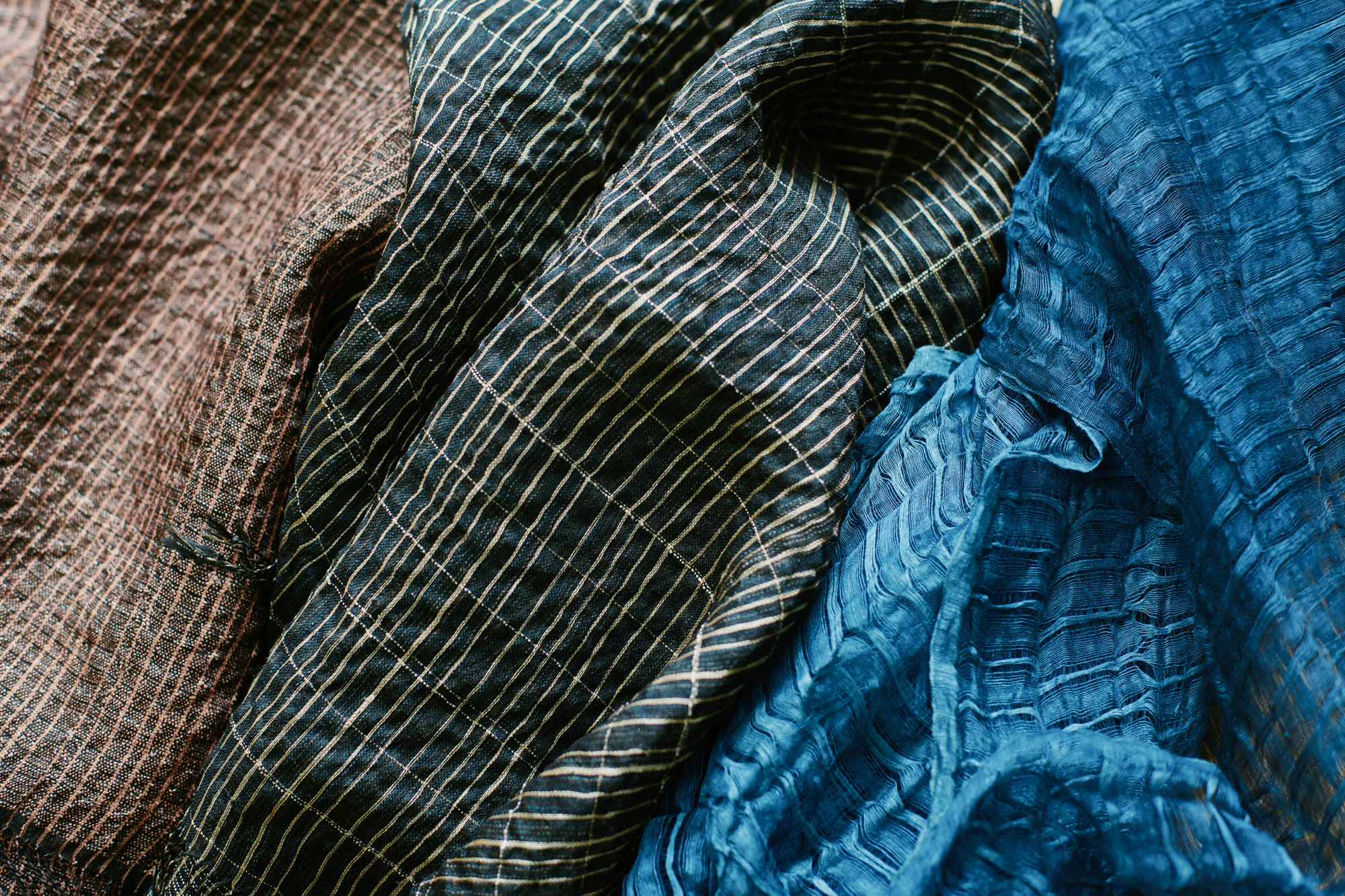
Born from this environment are textiles with rich colors, ranging from the deep red hues of hirugi mangroves to the golden yellow of fukugi and the deep shades of indigo, exuding an air of the island itself. The creation of colors culminates with the traditional process of umi-zarashi sea bleaching. “The sea is closely related to Okinawan life, and so umi-zarashi used to be done all over Okinawa. But as the waters became polluted it became less widespread,” explains Ishigaki. The process unfolds at a snaking corridor of hirugi mangroves on the mudflats near the workshop. Planted and tended to by Ishigaki over the years, the “Umi-zarashi Road” is where her textiles are taken to be washed and soaked. The brackish mix of fresh- and saltwater binds the pigments and minerals, such as magnesium, producing a color-fixing effect and preventing mold from forming. “Iriomote is the only place where this is possible,” adds Ishigaki. “The process is proof that the natural environment is still healthy.” As one of the island’s elder artisans, Ishigaki takes pride in sharing her wisdom with the next generation of weavers. This includes teaching emerging artists, many of whom have relocated there in recent years, while also holding workshops for students from Japan and abroad. Kuuru-Koubou has also drawn the attention of researchers from a range of fields including traditional weaving and dyeing techniques, natural materials, and environmental issues. Yet at a local level, Ishigaki remains passionate about continuing her work creating and restoring traditional costumes for the distinctive festivals at the heart of island life. These include the 500-year-old Shichi festival, which is held in the tenth lunar month to give thanks for a good harvest and pray for good health. “We’ll all get together, teaching and creating night after night. Every year I make costumes one by one, and over time, I’ve come to think of it as my life’s work, the job bestowed upon me.”
New
MIYAZAKI
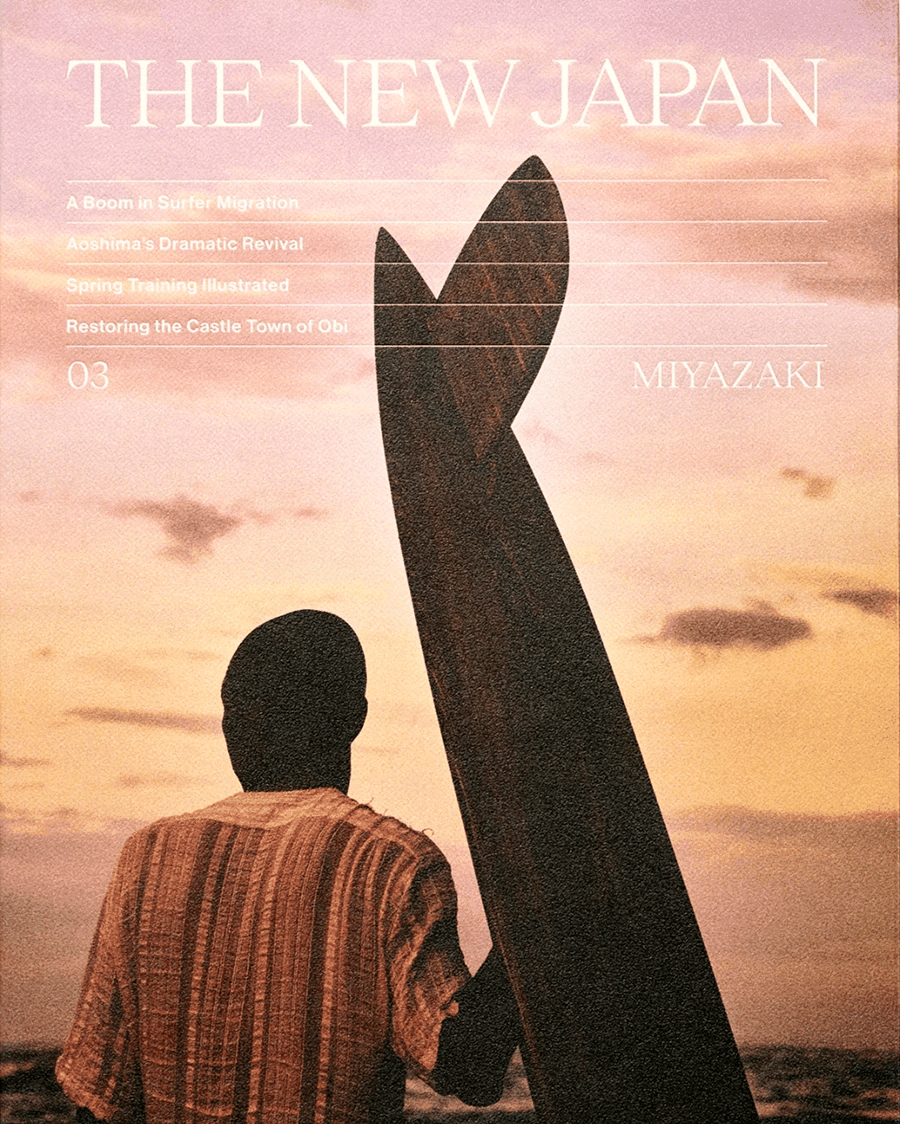
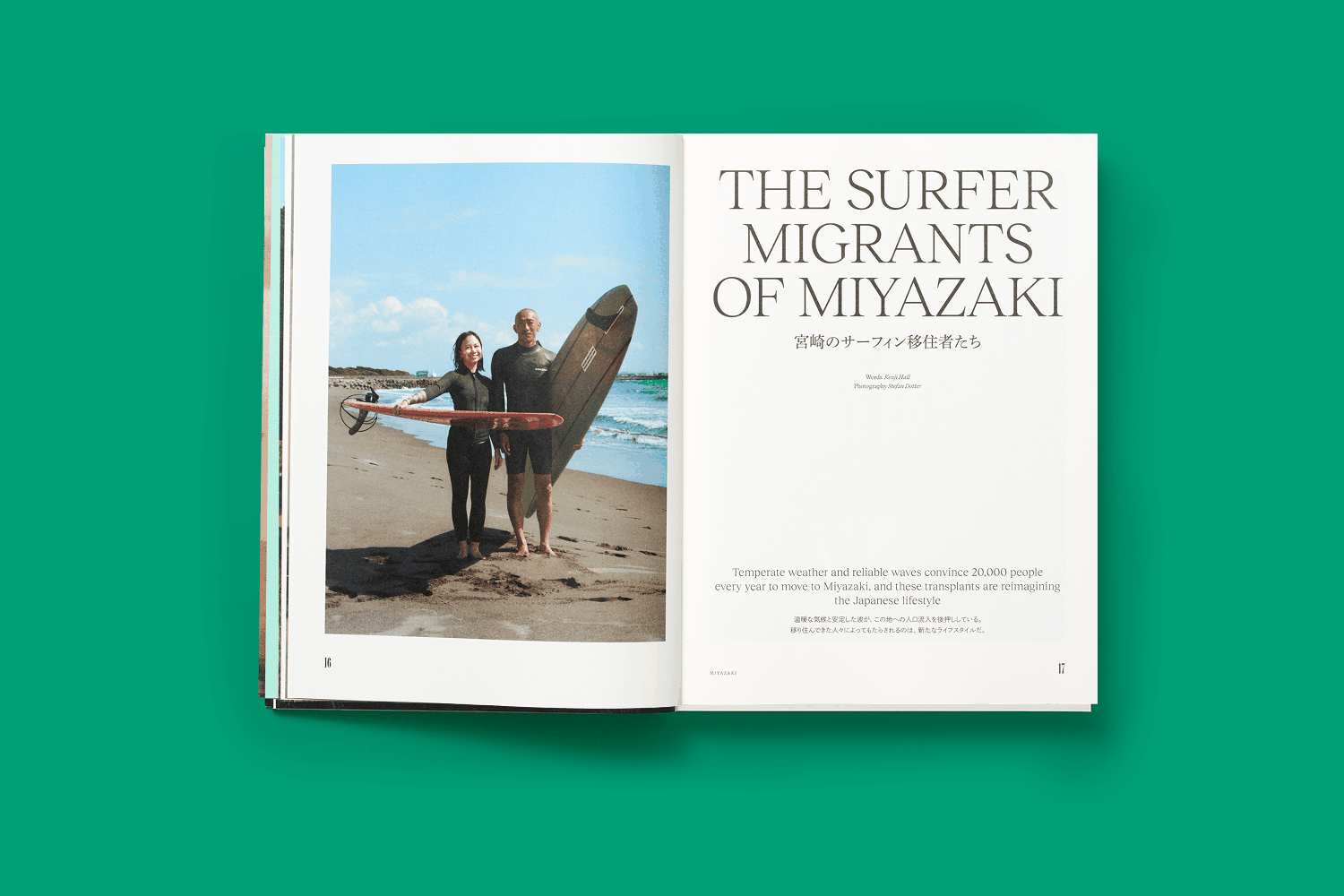
Miyazaki Prefecture in southeastern Kyushu is attracting a major wave of migration from other parts of Japan. We explored this sunny region's vibrant surfing culture, the small businesses and communities established by these newcomers, and the local design initiatives found in the historic castle town of Obi.