Kaitō Morizono: A New Generation of Board Building
Photography: Maya Tanaka/Words: Ron de Leeuw
Amid the foam dust of his backyard shaping bay, we visited young surfer Kaitō Morizono, who is connecting his love of surfing to gorgeous new board designs.
There is a year-long wait for bespoke surfboards shaped by the Miyazakiborn-and-raised former pro surfer Kaitō Morizono. He is one of the few hand shapers and laminators who work in Miyazaki, but more importantly, he caters to a real gap in the market: surfers who want midlength, fish, and single-fin boards that deliver a looser, flow-oriented style of surfing. Morizono, now 29, was a competitive surfer in his teens. During a competition in Bali at age 19, however, he decided that he had enough with the grind of the circuit. He was sick of constantly trying to secure sponsorship deals and weathering a brutal travel schedule. Since then, Kaitō has been able to open himself up to all kinds of new surfboard shapes and approaches. Ones that that weren’t dictated by the competition format, but that allow for a different artistic expression in riding. Surfboards have taken many different shapes in the past. Up until 1967, longboards reigned supreme. But then there was a shortboard revolution, that lasted until about 1970, which opened up new ways of riding in more types of surf. What Kaitō has mastered is riding and building fishes, midlengths, and single fins. Shapes that allow an incredibly loose style of surfing and offer a wider range of rideable waves and many more riding styles, creating beautiful silhouettes.
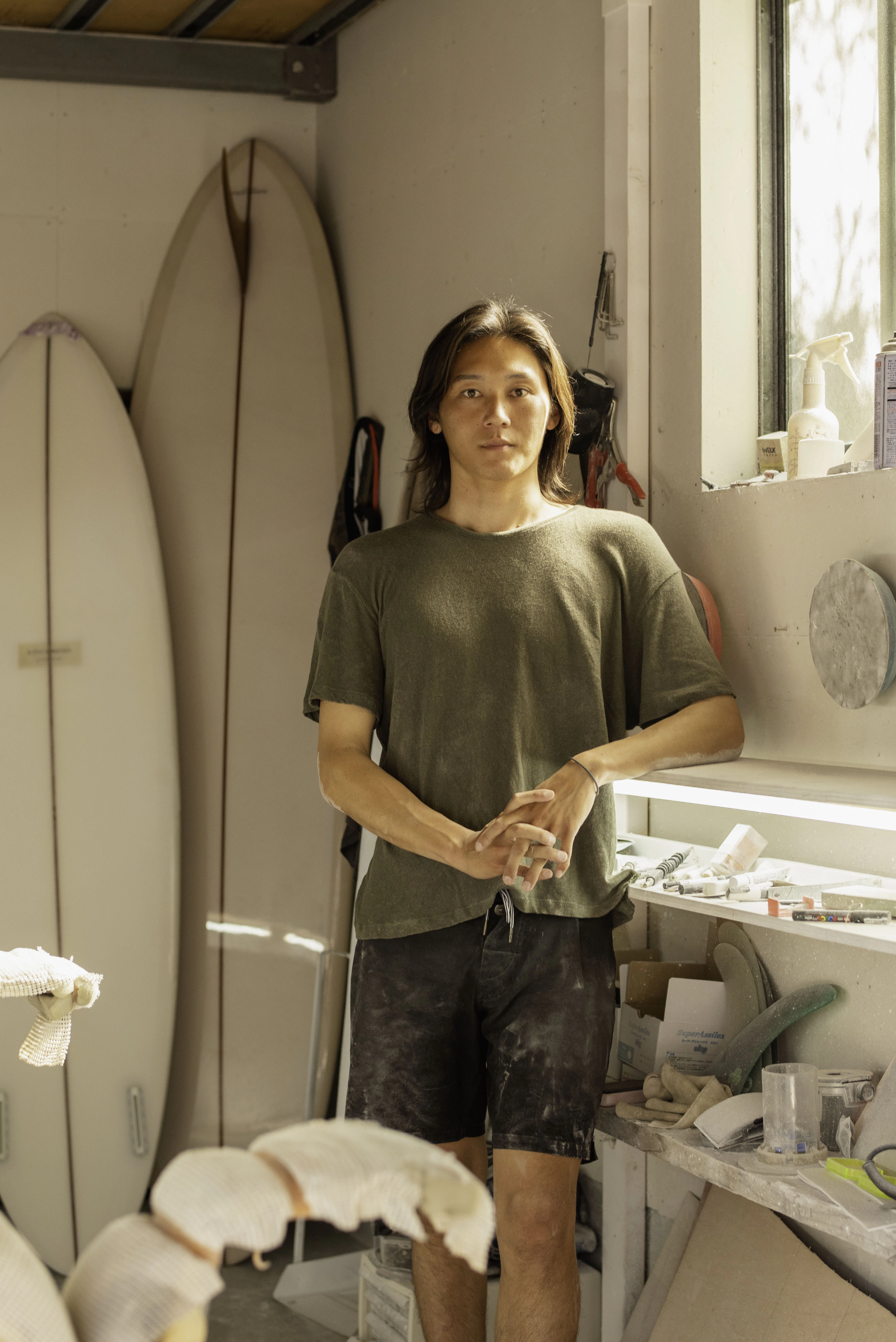
Kaitō started making these types of boards about five years ago and is entirely self-taught. “It’s all just an image in my head,” he says. “Like mindsurfing, but with building the boards. Making surfboards can be messy. Working with polyurethane foam, fibreglass, and polyester resin creates a hazardous environment that demands respirators, proper ventilation, stable temperature and humidity, and careful cleaning. Stepping into Kaitō’s shaping bay feels like walking into a snow globe, foam dust hanging in the air as if a child had shaken the entire room. “I’m about to release my third model,” Kaitō says proudly while showing the fourth iteration. “It takes me about five versions before I’m comfortable offering a new design to others. This time it will be a midlength single fin.” The design changes, but the process stays the same: a heavily ritualised endeavor that involves literally hundreds of steps as you shave and sand a foam blank down layer by layer.
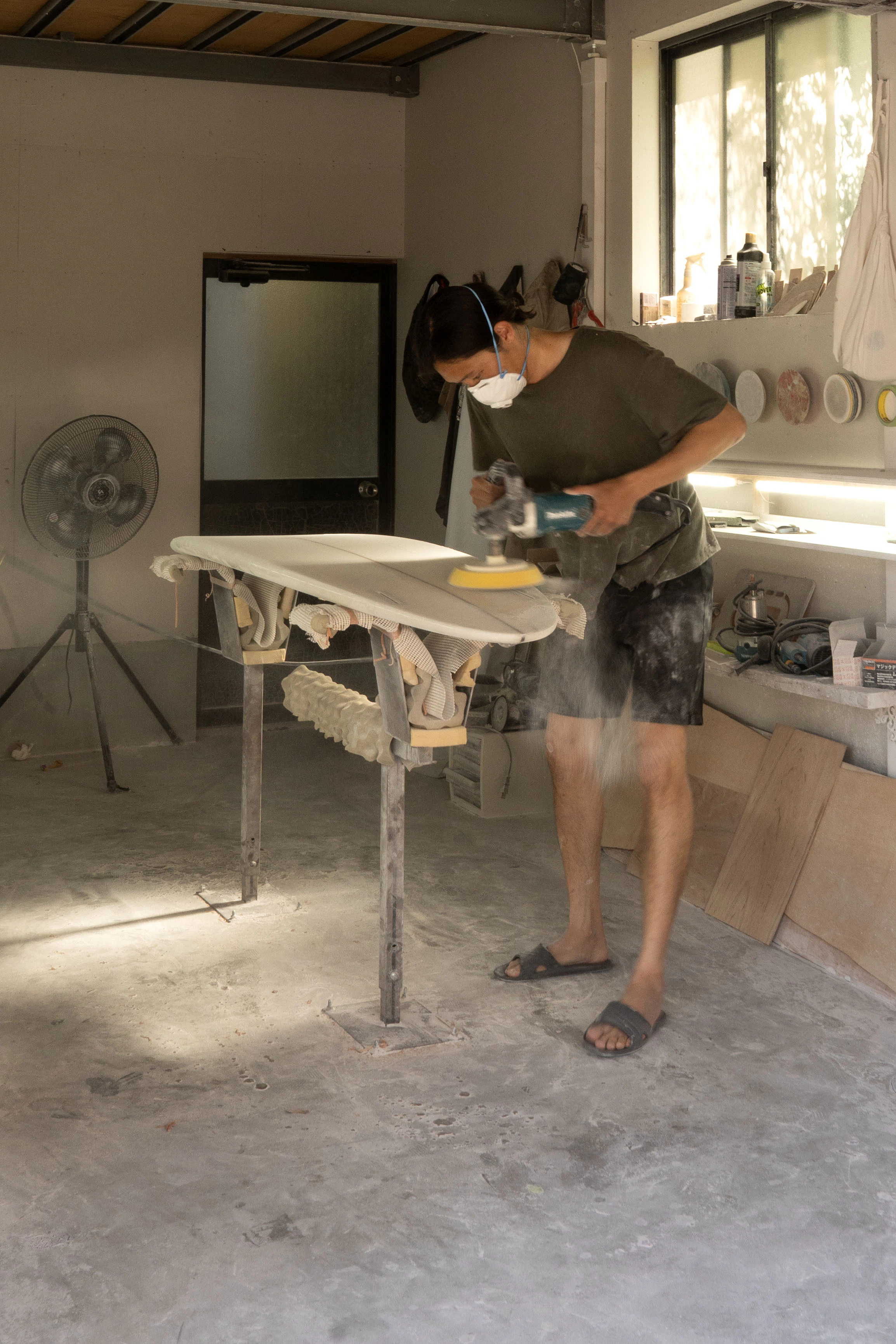
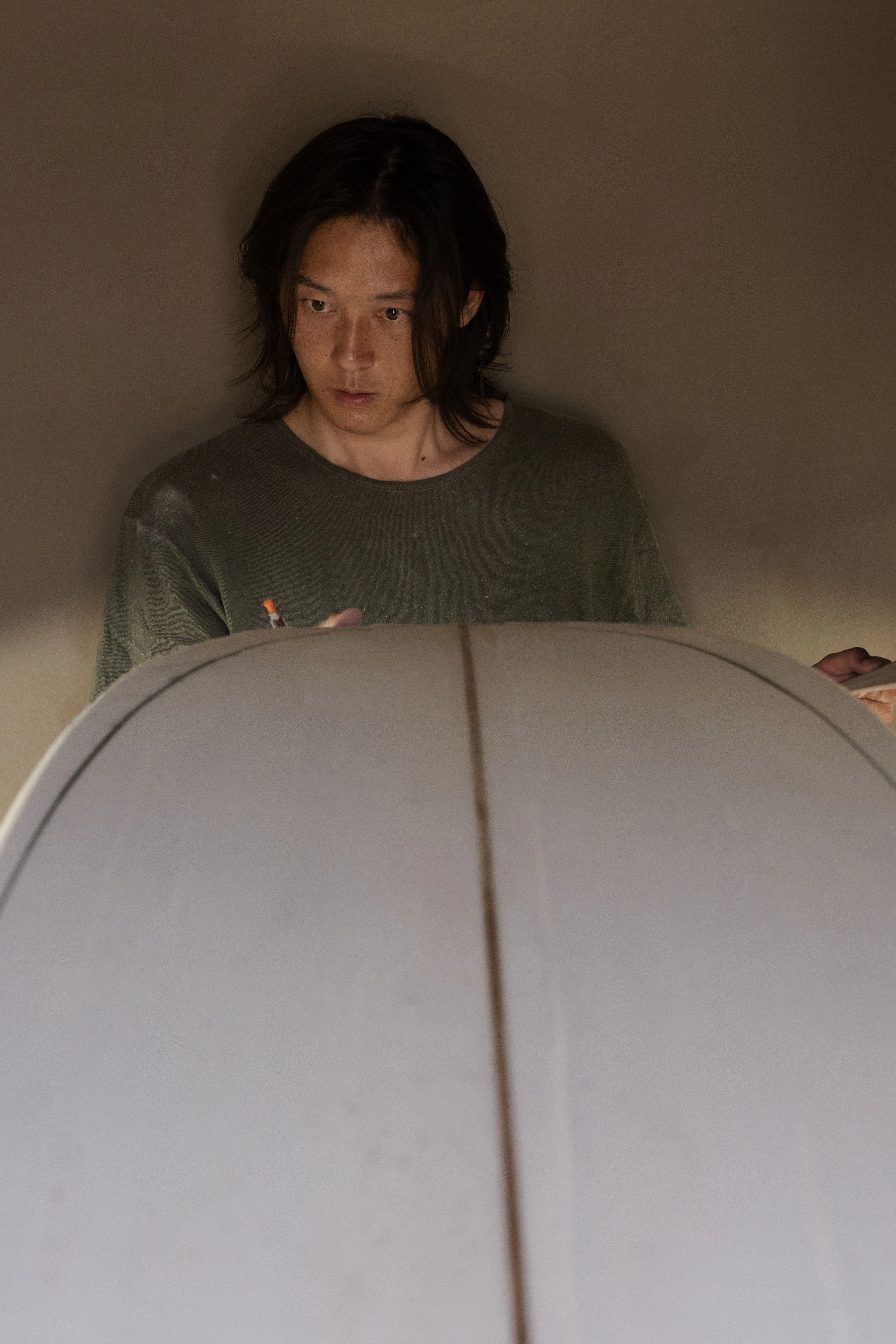
In some ways it’s a lot like sculpting in wood, stone, or marble—the functional art piece is hidden inside two slabs of foam joined by a single wooden slat, called a stringer, added for strength, rigidity, and a certain flex. Most boards, though not all, are symmetrical: whatever you do on the left of the stringer has to be matched exactly on the right. For now he does everything from his home in Miyazaki. Doing it all himself, he can only design, shape, sand, laminate, and finish a single board every week. At roughly 50 a year, Kaitō manages to make a decent living. But with his ambitions—and the staggering number of orders—he’s giving more serious thoughts about expansion. Becoming a true master may take a lot of eyeing, feeling, and measuring—but mostly it takes shaping hundreds or thousands of boards. And Kaitō is well on his way.
New
MIYAZAKI
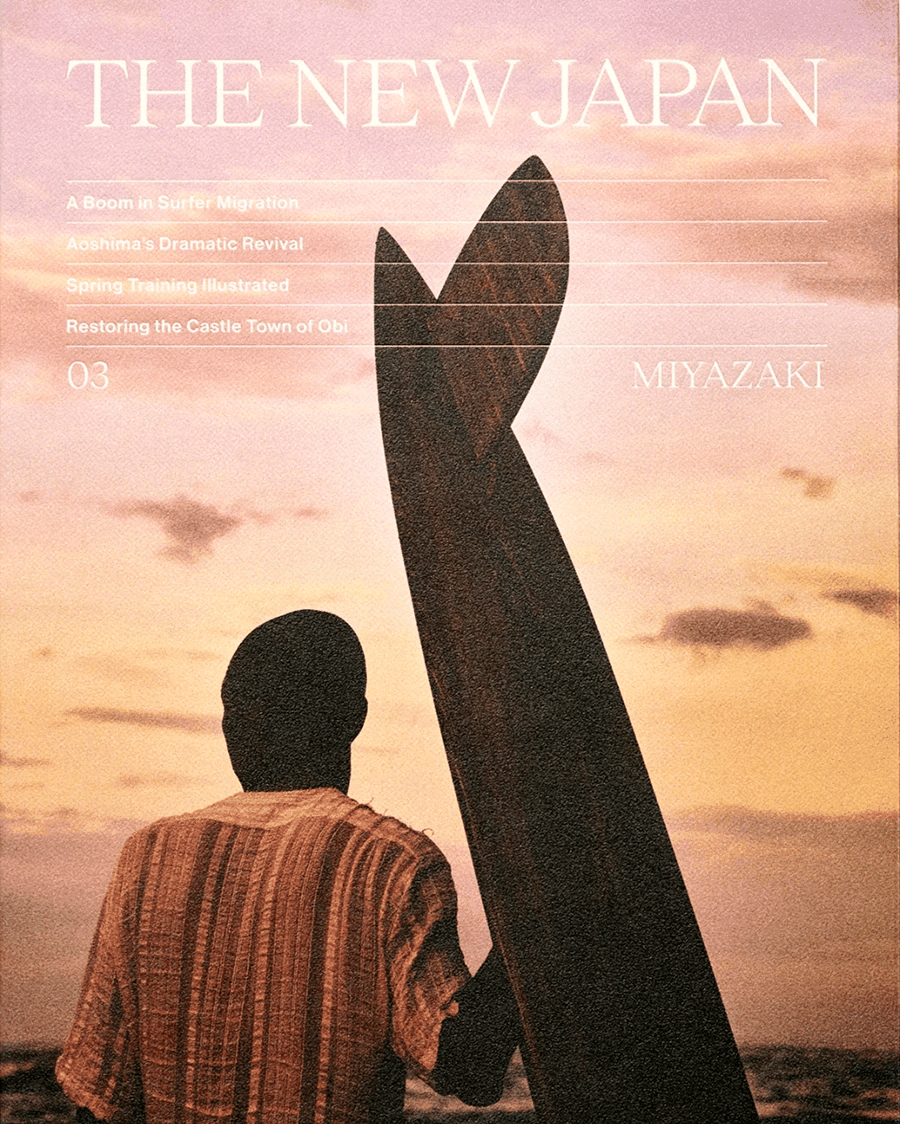
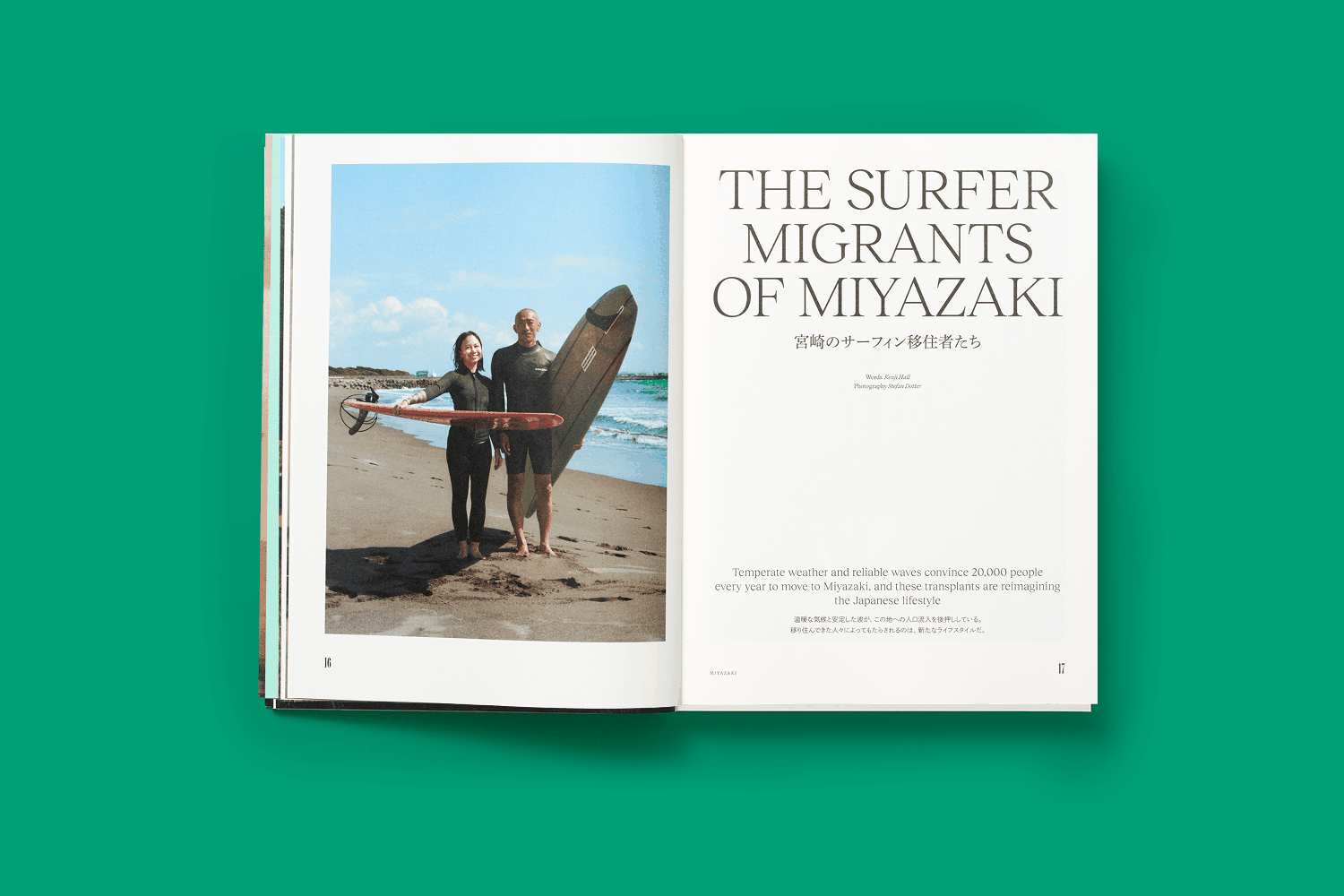
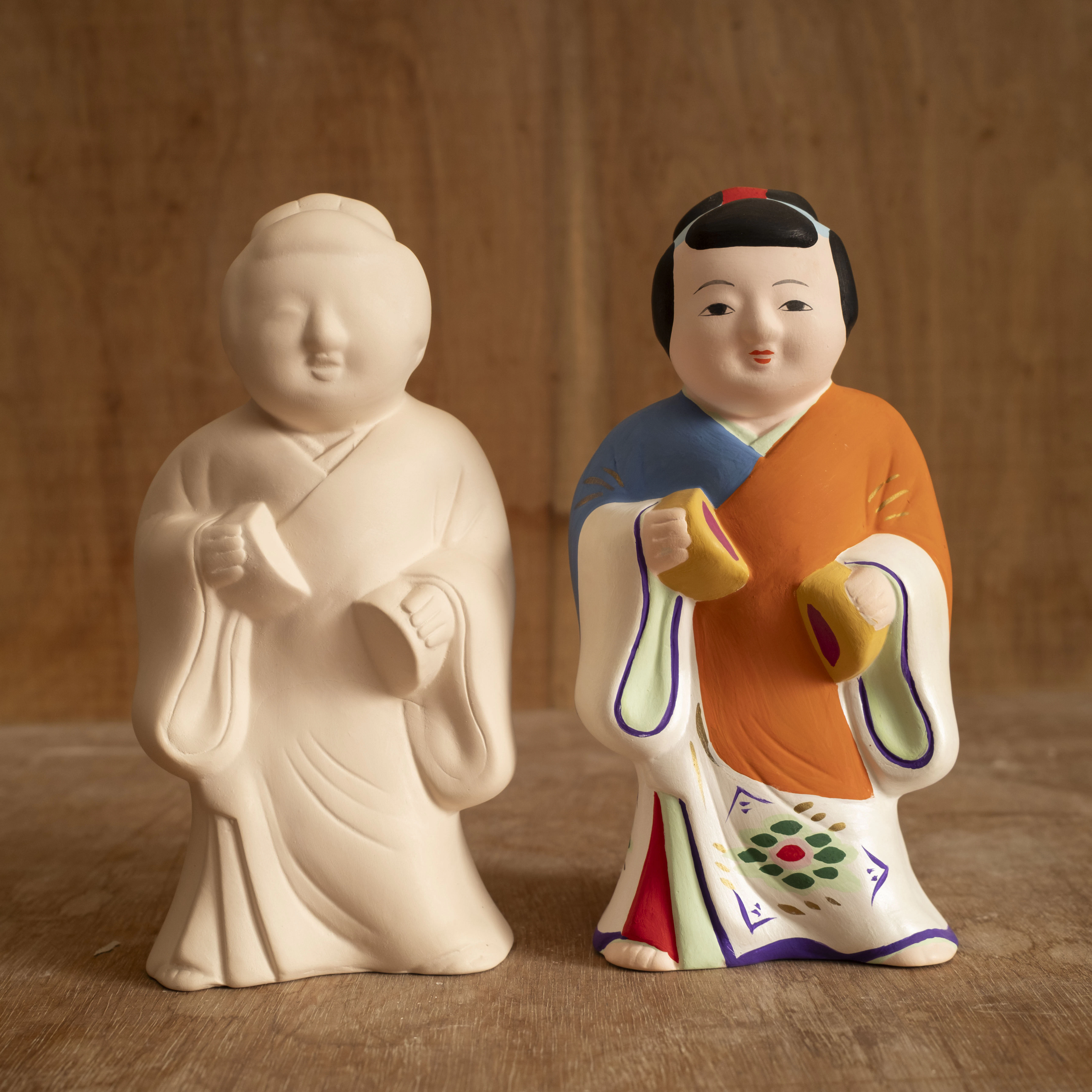
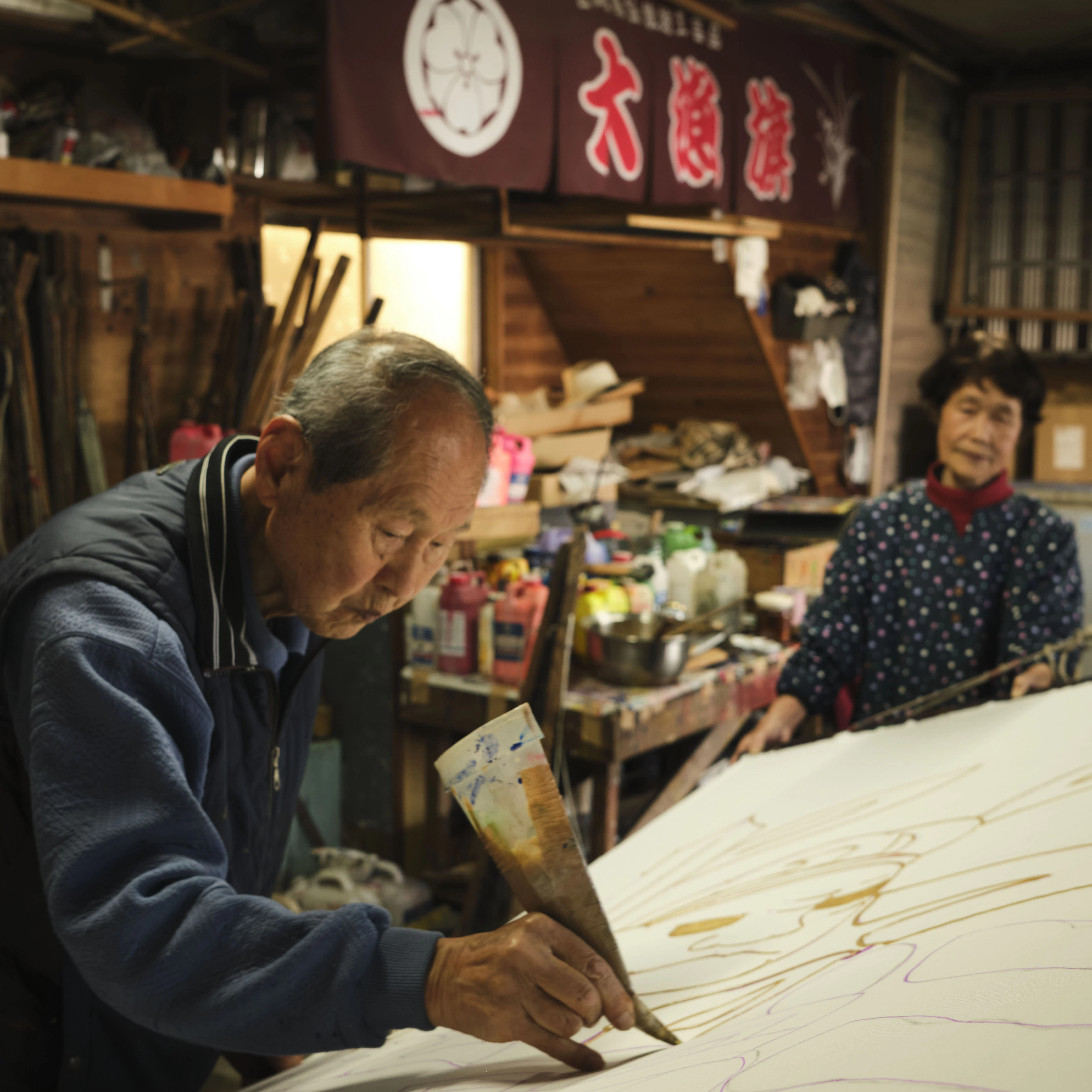
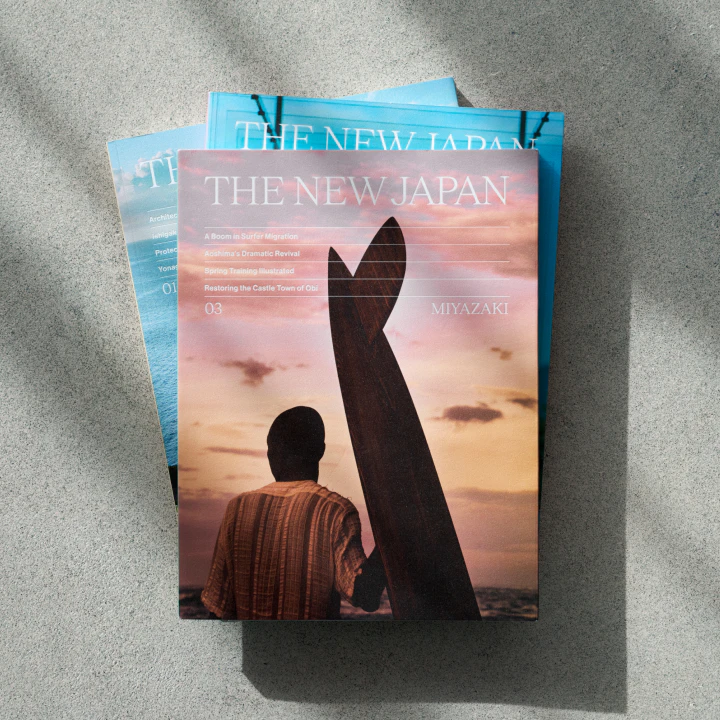
Miyazaki Prefecture in southeastern Kyushu is attracting a major wave of migration from other parts of Japan. We explored this sunny region's vibrant surfing culture, the small businesses and communities established by these newcomers, and the local design initiatives found in the historic castle town of Obi.