Yoshida Hataten’s Large-Catch Flags
Photography: Tetsuo Kashiwada/Words: Tomoki Nakamuta
These brilliantly colored flags adorn fishing boats and represent an artisanal tradition of their own.
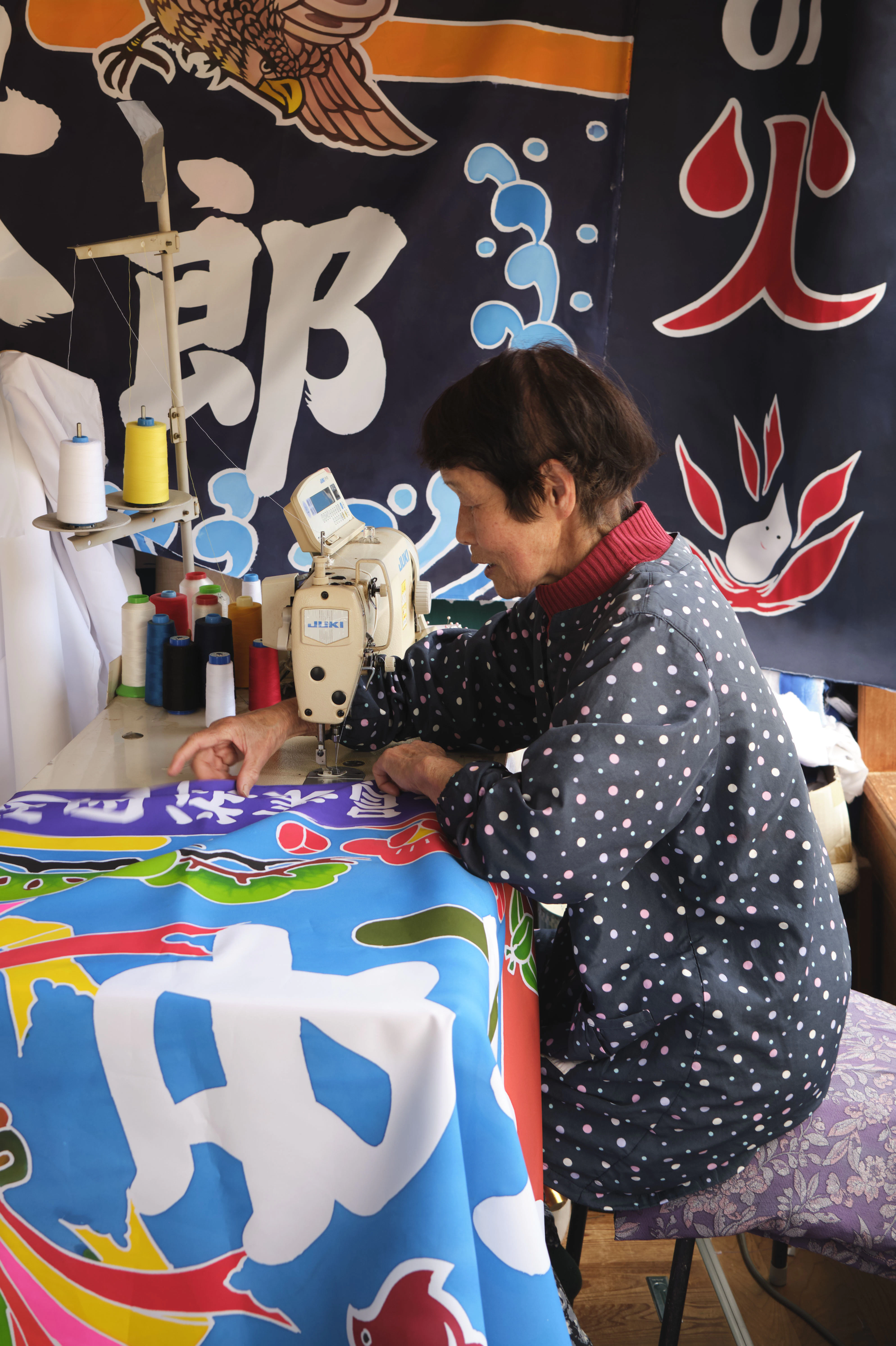
In a garden beside the Furue River in Kitaura, Nobeoka City, vividly colored flags sway as they dry in the sun. This is Yoshida Hataten, a workshop devoted to tairyō-bata—the traditional “big catch” flags often seen in Japan fishing villages. Facing the Hyūga Sea and the warm Kuroshio Current, Kitaura is known as one of Miyazaki Prefecture’s foremost centers for the fishing industry. With each ship-launching ceremony, fishermen commission a new flag to pray for safe voyages and a bountiful catch. Ceremonial noshi motifs, Mount Fuji, and other auspicious designs adorn them in brilliant color. Each of these striking flags is crafted entirely by hand by Norio Yoshida, the shop’s third-generation owner. He first draws the underlying design, then transfers lettering such as the ship's name using stencils he cuts himself. Along the drawn lines he carefully applies a special paste made from rice flour and rice bran. This paste repels dye—an essential step for rendering the intricate patterns. After brushing on the dye, the flag is sun-dried and rinsed with water. Even at its fastest, the process takes at least two days. On the day of our visit, Yoshida completed the pasting work with the help of his wife, Sachiko, with whom he runs the shop.
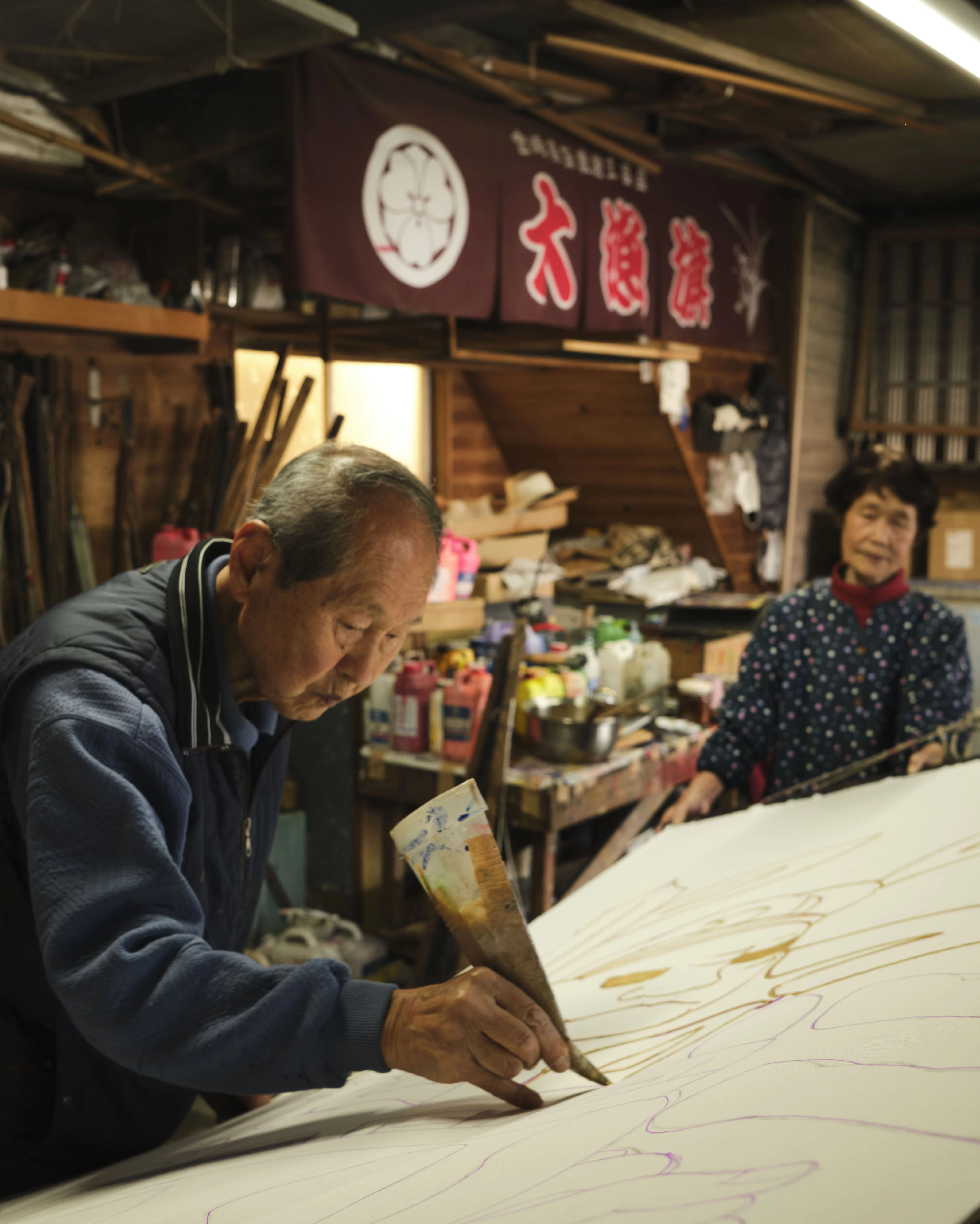
Yoshida Hataten was founded as a dyeing house in the final years of the Meiji era, and from around the Taishō period it began making large catch flags to meet the demand of the fishing villages. After graduating from junior high school, Yoshida trained for some fifteen years—at a dye shop in Nobeoka as well as in Fukuoka, Ōita, and Kyoto—before returning home. Today he now counts more than sixty years as an artisan in his craft. In recent years, Yoshida’s work has expanded well beyond large catch flags to Boys’ Day carp streamers, shrine banners, restaurant noren curtains, school flags, and commemorative flags for marathon events. His bold yet delicate designs have even drawn an enka singer to commission an original flag of his own. Running through all of it is the same thread: the hopes each client entrusts to the flag, and the sure hand of the artisan who gives them form.
New
MIYAZAKI
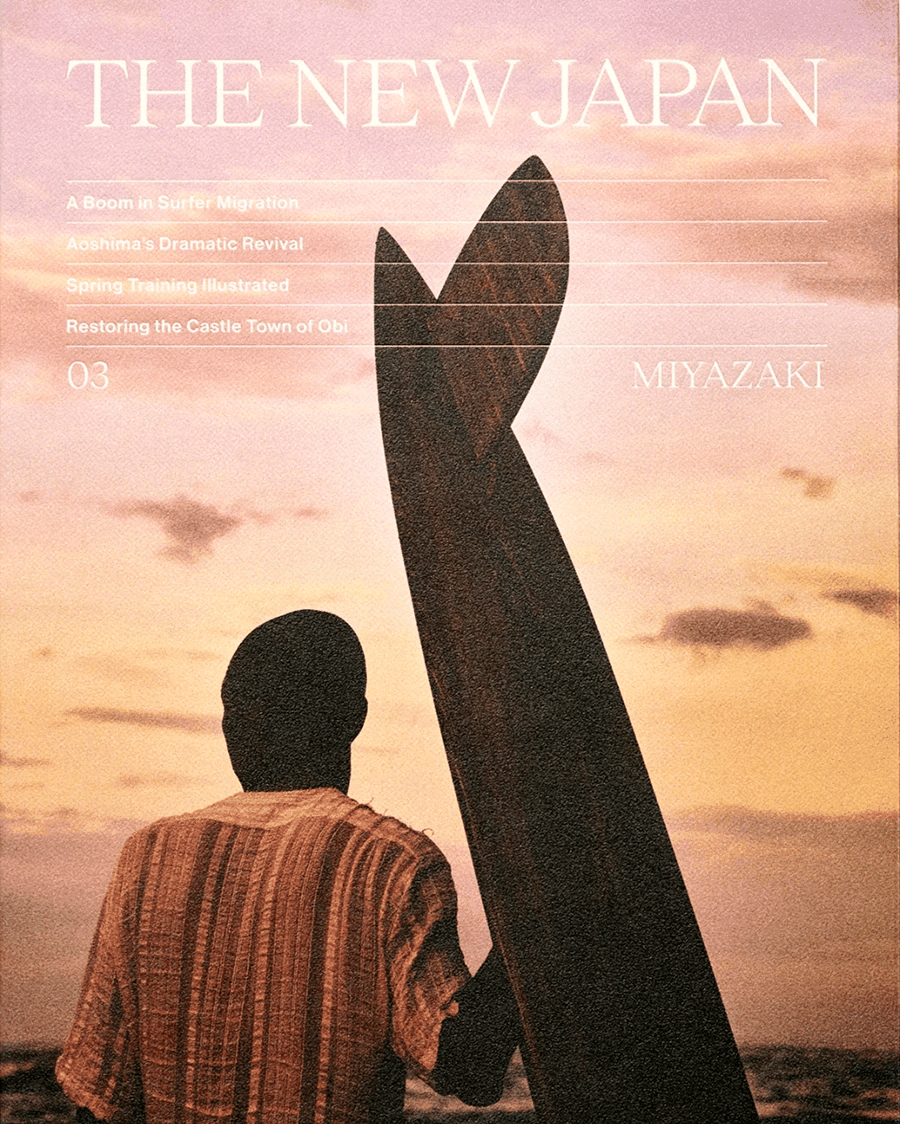
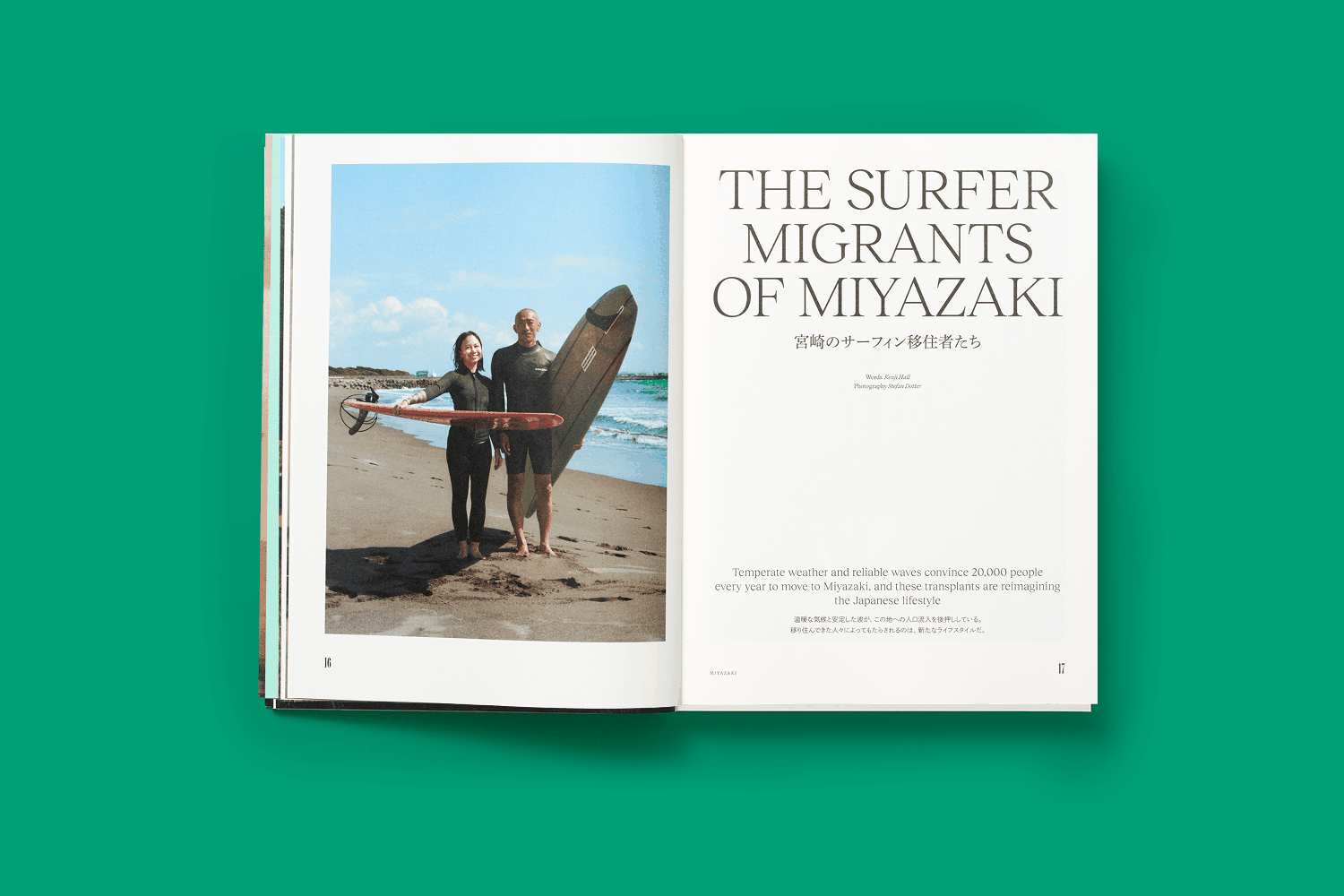
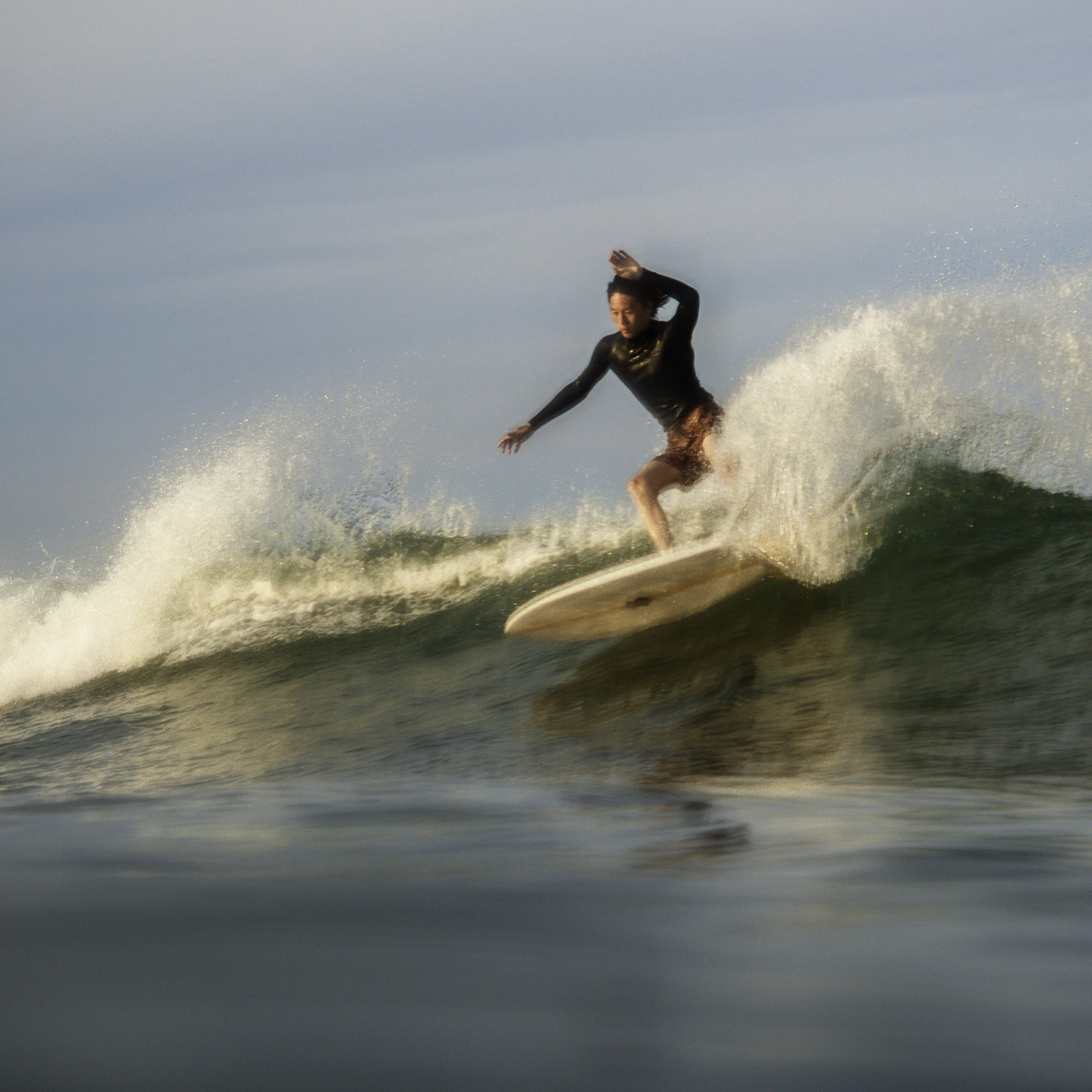
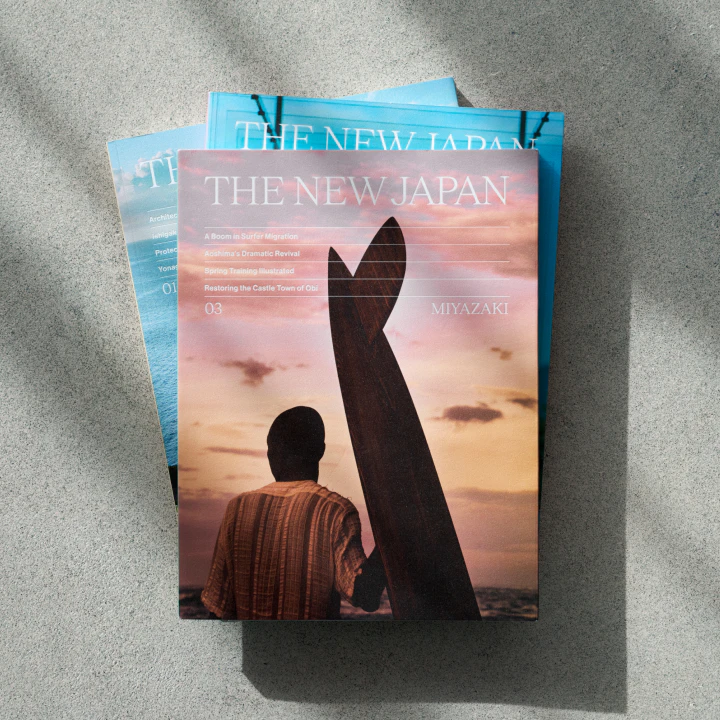
Miyazaki Prefecture in southeastern Kyushu is attracting a major wave of migration from other parts of Japan. We explored this sunny region's vibrant surfing culture, the small businesses and communities established by these newcomers, and the local design initiatives found in the historic castle town of Obi.